 listicle
Are Mediterranean Brunches Actually Healthier?
Last Updated: November 6, 2026
Quick Summary
A mediterranean brunch supports health by replacing heavy meats and refined carbs with vegetables, whole grains, olive oil, legumes, and modest portions of fish, eggs, and dairy. This eating pattern is linked in research to lower cardiovascular disease incidence and reduced mortality risk, and brunch is the easiest meal to shift toward it.
- Build half your plate with vegetables and fruit, one quarter whole grains, one quarter lean protein.
- Keep olive oil to 1 to 2 tablespoons per plate and nuts or seeds to 1 to 2 tablespoons.
- Choose coffee, tea, or sparkling water with lemon instead of sugary cocktails and syrupy coffee drinks.
- Keep dessert small and fruit-forward, or share one indulgence rather than making it the meal.
- Parthenon Greek Restaurant & Chevy Chase Lounge has served this style of food since 1989.
Table of Contents
- What Makes a Mediterranean Brunch Different
- Mediterranean Diet Breakfast Ideas That Actually Satisfy
- The Mediterranean Diet Anti-Inflammatory Benefits on Your Plate
- How to Order Greek Food Without Seafood
- Healthy Fats, Whole Grains, and Fiber: Building a Balanced Brunch Plate
- Brunch Drinks, Desserts, and the Less Healthy Choices
- Booking Your Mediterranean Brunch Table
- Frequently Asked Questions
What Makes a Mediterranean Brunch Different
A Mediterranean brunch is a weekend meal built around vegetables, whole grains, olive oil, legumes, and modest portions of fish, eggs, and dairy rather than heavy meats and refined carbs. At Parthenon Greek Restaurant & Chevy Chase Lounge, we have served this style of food since 1989, and the difference shows up on the plate before you take a bite: color, freshness, and food that leaves you satisfied instead of sluggish.
The benefits of a Mediterranean diet for brunch come down to what the pattern replaces. Instead of sausage, white toast, and sugary pastries, you get tomatoes, cucumbers, olives, feta, yogurt, eggs, and whole grains. A review of Mediterranean diet research describes links between this eating pattern and lower cardiovascular disease incidence and reduced mortality risk.
What most guides miss is that brunch is the easiest meal to shift toward this pattern. You are already eating eggs, bread, and something fresh. Swapping a few components changes the whole nutritional profile. For a closer look at traditional morning dishes, see our guide to traditional Greek breakfast dishes.
Mediterranean Diet Breakfast Ideas That Actually Satisfy
Start with protein and fiber, then add flavor. A brunch that keeps you full until dinner usually pairs eggs or Greek yogurt with whole-grain bread, vegetables, and a drizzle of olive oil. The combination of protein, fiber, and fat slows digestion and steadies your energy through the afternoon.
Here are five brunch plates that work:
- Greek yogurt with honey, walnuts, and seasonal fruit. High in protein, with nuts adding crunch and healthy fat.
- Spinach and feta omelet with a side of tomatoes. Eggs bring protein; spinach adds fiber and volume.
- Whole-grain toast with olive oil, tomato, and crumbled feta. Simple, fast, and built on unsaturated fat.
- Breakfast gyro with vegetables and tzatziki. A wrapped meal that balances protein, vegetables, and yogurt.
- Greek salad with a boiled egg and a slice of whole-grain bread. A lighter option that still satisfies.
A common mistake is treating brunch as dessert. Pastries and sweet drinks crowd out the protein and fiber that actually keep hunger away. Build the plate around savory first, and sweets become a small finish rather than the main event.
The Mediterranean Diet Anti-Inflammatory Benefits on Your Plate
The Mediterranean diet anti-inflammatory benefits come from the foods it emphasizes, not from any single ingredient. Olive oil, fatty fish, nuts, leafy greens, and colorful vegetables are the components most often associated with lower inflammation in research. A Veterans Affairs research brief on the Mediterranean diet reports that investigators identified a primary-prevention trial in which the diet was linked to a significant reduction in risk.
No single brunch dish is a cure-all, and no meal undoes a week of poor eating. The pattern matters more than any one plate.
Brunch once a week will not transform your health, but it is a low-effort place to start.
How to Order Greek Food Without Seafood
Plenty of Greek menus go far beyond fish, and you can build a full, satisfying brunch without touching seafood. The trick is to order from the meat, vegetable, legume, and dairy sides of the menu instead of the seafood section. For a deeper walkthrough, our guide on ordering Greek food without seafood covers the full range of choices.
How to order Greek food without seafood, step by step:
- Pick a protein anchor. Grilled chicken, lamb, pork, or a gyro fills the role seafood usually plays.
- Add legumes. Lentil and bean dishes bring fiber and plant protein.
- Load up on vegetables. Greek salad, roasted vegetables, and horta are not side notes; they are the backbone.
- Choose dairy and eggs. Feta, Greek yogurt, and egg dishes round out the plate.
- Ask about preparation. Ask your server how a dish is cooked and which fats are used.
Watch out: some Greek menus use the same lemon-oregano seasoning across every dish, so a seafood-free meal can start to taste repetitive if you order carelessly. Mix a grilled item with a cold vegetable dish and a yogurt-based side for contrast.
Healthy Fats, Whole Grains, and Fiber: Building a Balanced Brunch Plate
A balanced Mediterranean brunch plate follows a simple division: half vegetables and fruit, one quarter whole grains, one quarter lean protein, plus a small amount of olive oil and nuts. That structure delivers fiber, protein, and unsaturated fat in one sitting without weighing you down. The difference between a brunch that holds you until dinner and one that sends you back to the pantry an hour later usually comes down to three numbers: fiber, protein, and unsaturated fat.
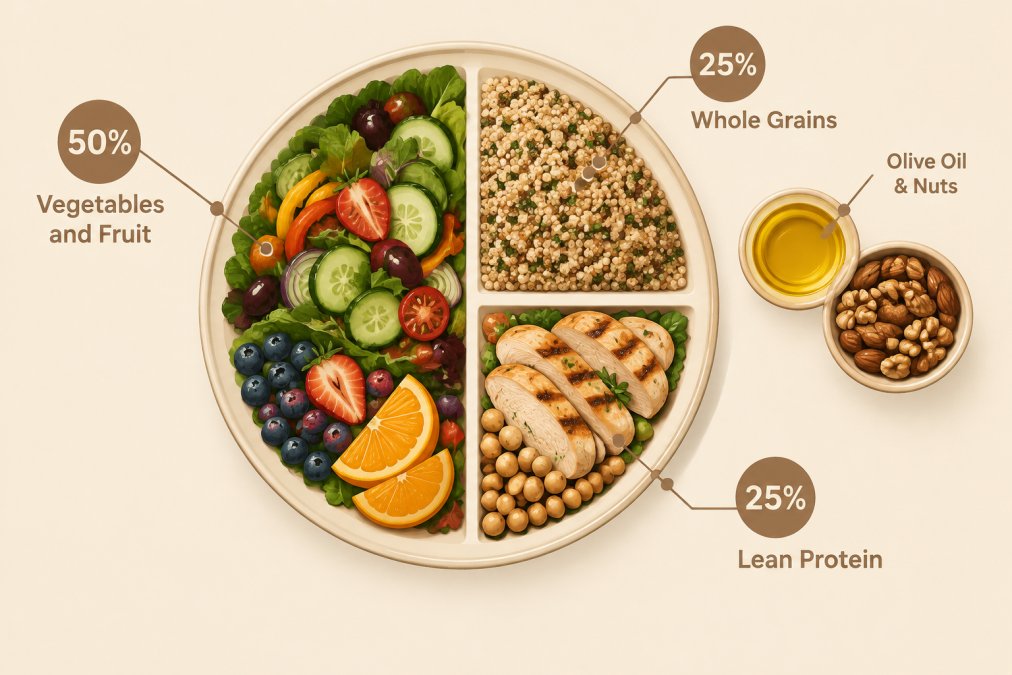
Here is what that division looks like in actual portions on a standard 10-inch plate:
- Vegetables and fruit (half the plate): about 1 to 1.5 cups of sliced tomatoes, cucumbers, peppers, spinach, or roasted vegetables, plus a half-cup of fruit such as berries, orange segments, or melon.
- Whole grains (one quarter): one slice of whole-grain bread, half a whole-wheat pita, or about 1/2 cup of cooked bulgur, farro, or oats.
- Lean protein (one quarter): two eggs, 3/4 cup of plain Greek yogurt, 1/2 cup of cooked lentils or chickpeas, or 3 ounces of grilled fish or chicken.
- Fats (a small finish): 1 to 2 tablespoons of extra virgin olive oil for the whole plate, plus 1 to 2 tablespoons of nuts or seeds.
A plate built this way contributes a meaningful share of the day's fiber, protein, and unsaturated fat.
Fiber is the most underrated part of the plate. Whole grains, legumes, vegetables, and fruit all contribute, and fiber is what turns a small plate into a filling one.
Healthy fats from olive oil, nuts, and seeds add flavor to the plate. Extra virgin olive oil is the dominant fat in the pattern, and nuts and seeds supply unsaturated fat. Calorie density is worth keeping in mind, since both are energy-rich.
Watch out: a heavy hand with olive oil or nuts can make a light brunch much more calorie-dense, so keep portions modest.
Portion size still counts. A drizzle is enough. For help assembling the sides, our guide to Greek side dishes shows how to balance vegetables, dips, and small plates. If you want to adapt the plate for specific diets, the same structure works with gluten-free grains such as quinoa or rice, dairy-free yogurt, and nut-free seeds like pumpkin or sunflower in place of walnuts.
Here is how the article divides a standard 10-inch brunch plate.
| Plate section | Share of plate | Example portions |
|---|---|---|
| Vegetables and fruit | Half the plate | 1 to 1.5 cups vegetables, plus a half-cup of fruit |
| Whole grains | One quarter | One slice whole-grain bread, half a pita, or 1/2 cup cooked grains |
| Lean protein | One quarter | Two eggs, 3/4 cup Greek yogurt, 1/2 cup lentils, or 3 ounces fish or chicken |
| Fats | A small finish | 1 to 2 tablespoons extra virgin olive oil, plus 1 to 2 tablespoons nuts or seeds |
Brunch Drinks, Desserts, and the Less Healthy Choices
Drinks and desserts are where a healthy brunch quietly goes off the rails. A Mediterranean-style meal can absorb a small sweet or a single cocktail, but sugary cocktails, syrupy coffee drinks, and heavy pastries can undo the balance of the plate. The reason is simple: liquid calories and refined sugar arrive without the fiber, protein, and fat that make a brunch plate filling, so they add energy without adding satiety.
Drink choices make a difference. Sugary cocktails and syrup-based coffee drinks add calories without the fiber, protein, and fat that make a brunch plate filling, while black coffee, unsweetened tea, and sparkling water with lemon add very little. None of these are forbidden, but choosing two sugary drinks instead of one coffee and one sparkling water can add several hundred calories to a meal that was otherwise well built.
Better drink choices include coffee, tea, and sparkling water with lemon. Water with meals is standard in the Mediterranean pattern. If you want the ritual of a special drink without the sugar load, ask for a spritz of citrus in sparkling water or a coffee with milk instead of a flavored syrup drink.
For dessert, keep it small and fruit-forward. A piece of seasonal fruit or a small portion of yogurt with honey fits the pattern, and a shared dessert keeps it in the "small finish" category rather than turning it into a second meal. Fresh fruit or a small bowl of berries with a spoon of yogurt delivers sweetness with fiber and protein attached.
What most guides miss is that the less healthy choices are not forbidden, they are just smaller. The Mediterranean pattern is a way of eating over time, not a rulebook for one meal. One indulgent brunch does not break it. The practical move is to decide in advance which indulgence you actually want, the pastry, the cocktail, or the dessert, and keep the rest of the plate and the drinks aligned with the pattern.
Booking Your Mediterranean Brunch Table
The easiest way to see the difference for yourself is to eat it. You can review the full Greek brunch menu before you come in.
Reservations help on busy weekends, especially for groups. If you are planning a team outing or a celebration, reserve your table ahead of time, or go straight to Experience Greece in DC to book.
The benefits of a Mediterranean diet for brunch are real, but they are cumulative. One plate will not change your health, and one heavy brunch will not ruin it. The point is to make the better choice the easy one, week after week.
At Parthenon Greek Restaurant & Chevy Chase Lounge, we have been serving Greek cuisine since 1989, using imported Greek products and extra virgin olive oil. Get started with Parthenon Greek Restaurant & Chevy Chase Lounge and book a table that makes the healthier choice taste like the better one.
Frequently Asked Questions
What are the core components of a Mediterranean-style brunch?
A Mediterranean brunch centers on whole foods: vegetables, fruit, whole grains, legumes, nuts and seeds, olive oil, and a lean protein such as Greek yogurt, eggs, or fish. Olive oil is a common fat in this style of eating, and whole grains often take the place of refined bread. The plate stays plant-forward, with animal foods playing a supporting role rather than dominating. That structure is what separates a Mediterranean brunch from a plate of pancakes, bacon, and syrup.
Is a Mediterranean brunch actually heart-healthy?
The Mediterranean dietary pattern is a way of eating over time rather than a single meal, so one brunch will not transform your health. A Mediterranean brunch emphasizes unsaturated fats, fiber, and portions that leave you satisfied.
How does a Mediterranean brunch differ from a traditional American brunch?
The American version leans on refined flour, added sugar, and cured or fried meats. A Mediterranean brunch swaps those for whole grains, fresh fruit, vegetables, legumes, and olive oil. You still get eggs, but alongside tomatoes, spinach, and feta rather than hash browns. Drinks can shift too, toward options like coffee, tea, or sparkling water with citrus. The result is a meal with more fiber and unsaturated fats and less added sugar, which tends to keep hunger down longer.
Can you eat eggs on a Mediterranean diet?
Yes. Eggs appear in Mediterranean eating patterns, often baked with tomatoes and peppers or boiled alongside vegetables. They supply lean protein that supports satiety, the feeling of fullness that carries you to the next meal. The key is what surrounds them: pair eggs with vegetables, whole-grain bread, and olive oil rather than bacon and white toast. If you are ordering Greek food without seafood, egg-based dishes are a common choice to ask about.