 blog
blog
Traditional Greek Breakfast Dishes to Try
Table of Contents
- Why Greek Breakfast Is Worth Waking Up For
- Greek Yogurt and Honey: The Creamy Classic
- Savory Greek Egg Dishes: Omelettes and Scrambles
- Traditional Breads and Pastries Fresh From the Oven
- Feta Cheese: The Breakfast Table Staple
- How to Order Greek Food Without Seafood
- Greek Coffee Culture and Regional Breakfast Specialties
- Frequently Asked Questions
Last Updated: October 1, 2026
Why Greek Breakfast Is Worth Waking Up For
A Greek breakfast is a slow, savory-sweet spread built on thick yogurt, warm bread, cured olives, and strong coffee. It borrows from the Mediterranean diet pattern documented by the Harvard T.H. Chan School of Public Health, one of the most studied ways of eating in the world.
The best part? You do not need a plane ticket to try it. Below, we break down the traditional greek breakfast dishes to try, from creamy yogurt to flaky pastries, plus how to order if you skip seafood.
Greek Yogurt and Honey: The Creamy Classic
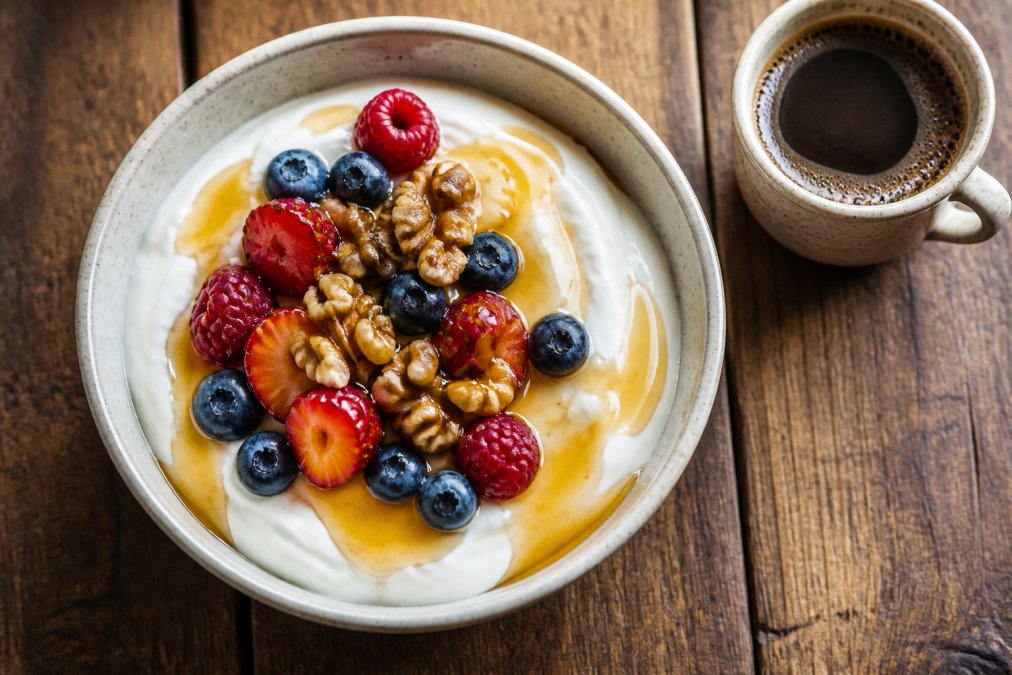
Greek yogurt with honey is the anchor of the morning table. The yogurt is strained until thick and creamy, then drizzled with golden honey and topped with walnuts.
This is the dish most people picture when they think of a greek breakfast. It is simple, protein-rich, and ready in two minutes.
What makes it work is the contrast. Cold, tangy yogurt meets warm, floral honey. Crunchy nuts cut through both.
Greek Yogurt Breakfast Toppings That Go Beyond Honey
Honey is just the starting point. Greek yogurt breakfast toppings range from sweet to savory, and the best bowls mix both.
- Fresh fruit: figs, peaches, cherries, or pomegranate seeds
- Nuts: walnuts, almonds, pistachios, or hazelnuts
- Seeds: sesame, pumpkin, or sunflower
- Sweets: honey, grape molasses, or spoon sweets
- Savory: olive oil, sea salt, or a sprinkle of feta
A common mistake is drowning the yogurt in sugar. In Greece, the yogurt stays the star. Add one sweet topping and one crunchy topping, then stop.
Savory Greek Egg Dishes: Omelettes and Scrambles
Greek egg dishes are cooked low and slow in olive oil, not butter. The result is softer, richer, and closer to a custard than a diner scramble. Olive oil has a lower smoke point than many cooks assume, so the pan stays at medium-low heat and the eggs never brown.
The most common version is a simple omelette with feta and tomato. Some cooks add spinach, peppers, or herbs like dill and mint.
Here is what separates a Greek omelette from an American one:
- Olive oil instead of butter
- Feta instead of cheddar
- Tomatoes cooked into the eggs, not folded in raw
- A finish of fresh oregano
How to Make a Feta and Tomato Omelette (Step by Step)
This is the version most home cooks start with. It takes about eight minutes and needs only a handful of ingredients.
- Prep the filling. Dice one ripe tomato and pat it dry with a paper towel. Wet tomatoes steam the eggs instead of setting them. Crumble about 1/4 cup of brined feta.
- Heat the pan. Warm a nonstick or well-seasoned skillet over medium-low heat with one tablespoon of extra virgin olive oil. The oil should shimmer, not smoke.
- Soften the tomato. Add the tomato and a pinch of salt. Cook for two to three minutes until it releases its juice and the liquid mostly evaporates.
- Add the eggs. Whisk three eggs with a pinch of salt and pour them over the tomato. Do not stir. Let the edges set for about 30 seconds.
- Add the feta. Scatter the feta across the surface. As the eggs set, push the cooked edges toward the center and tilt the pan so raw egg fills the gaps.
- Finish and fold. When the top is just barely wet, fold the omelette in half and slide it onto a plate. Top with fresh oregano and a thread of olive oil.
The whole process rewards patience. If the eggs brown, the heat was too high.
Other Greek Egg Dishes Worth Knowing
- Strapatsada: scrambled eggs cooked with grated tomato, olive oil, and feta. It is the rustic cousin of the omelette and often served over toasted bread.
- Kayianas: a firmer, drier scramble, sometimes with tomato and onion, popular as a quick weekday breakfast.
- Avgolemono-style eggs: eggs finished with a lemon-and-broth emulsion, giving a silky, tangy sauce rather than a dry scramble.
Dietary Adaptations
Most Greek egg dishes are naturally gluten-free and vegetarian, which makes them easy to adapt.
- Dairy-free: skip the feta or swap in a firm plant-based cheese. The olive oil and tomato carry the flavor on their own.
- Vegan: replace the eggs with a firm tofu scramble. Press the tofu first, crumble it, and cook it the same way, low heat, olive oil, tomato, then a salty finish.
- Lower-sodium: rinse the feta briefly under cold water to pull out surface salt, then use less added salt in the eggs.
If you are new to this style, start with a plain feta omelette.
Traditional Breads and Pastries Fresh From the Oven
Greek mornings run on baked goods. The most famous is koulouri, a sesame-crusted bread ring sold from street carts and bakeries.
Then there is tiganites, small fried dough pieces drizzled with honey and cinnamon. They taste like a cross between a pancake and a doughnut.
And galatopita, a baked milk custard pie with a golden crust. It is sweet but not heavy, and it pairs well with coffee.
| Pastry | Texture | Best With |
|---|---|---|
| Koulouri | Crusty, chewy | Coffee or tea |
| Tiganites | Soft, fried | Honey and cinnamon |
| Galatopita | Creamy, baked | Greek coffee |
| Spanakopita | Flaky, savory | Yogurt |
A pro move: buy bread the same morning you eat it.
Feta Cheese: The Breakfast Table Staple
Feta shows up at almost every Greek breakfast, and it is not just a topping. It is a full player.
How to Order Greek Food Without Seafood
You can eat very well at a Greek table without touching fish. Here is how to order Greek food without seafood at any restaurant.
Start with the mezze section. Look for:
- Tzatziki: yogurt, cucumber, garlic, and olive oil
- Melitzanosalata: roasted eggplant dip
- Tiropita: cheese pie in flaky dough
- Dolmadakia: stuffed grape leaves with rice and herbs
- Grilled halloumi: firm cheese with a salty char
Greek Coffee Culture and Regional Breakfast Specialties
Greek coffee is thick, strong, and served in a small cup. It is brewed unfiltered, so you let the grounds settle before sipping. The foam on top, called kaimaki, is the mark of a well-made cup, if it is missing, the coffee was brewed too fast or at too high a heat.
How Greek Coffee Is Ordered
Greek coffee is usually ordered by sweetness level, not by size:
- Sketos: no sugar
- Metrios: medium sweetness, roughly one teaspoon
- Glykos: sweet, roughly two teaspoons
- Varys: very sweet
Breakfast Etiquette: When and Where
This is the part most guides skip. In Greece, breakfast is often a lighter, faster meal than visitors expect. Many people start the day with just coffee and a cigarette or a piece of bread, then eat a larger mid-morning snack. A full sit-down breakfast is more common on weekends, on holidays, or when someone is on vacation.
A common pattern is:
- Weekdays: coffee at home or at a standing cafe counter, plus a koulouri bought on the way to work
- Weekends: a slower table with eggs, bread, cheese, and fruit
- Cafes: the morning coffee crowd peaks mid-morning, and sitting for an hour is normal, not rude
Regional Breakfast Specialties
Regional breakfast specialties shift across the country:
- Crete: barley rusks topped with tomato, olive oil, and sometimes a crumble of fresh cheese. The hard rusk softens under the tomato and holds up to the oil.
- Peloponnese: fresh figs and local honey, often with yogurt or a slice of bread
- Northern regions: savory pies with greens and cheese, eaten warm from the bakery
- Islands: depending on the season, fresh fruit, nuts, and simple cheese plates
What to Drink With What
Coffee is not the only option, and the pairing changes the meal.
- With savory dishes (eggs, feta, pies): Greek coffee or a strong black tea. The bitterness cuts the salt and fat.
- With sweet dishes (yogurt, honey, galatopita): a lighter tea, or coffee with a little sugar. A very sweet drink on top of a sweet dish overwhelms the palate.
- With bread and olives: cold water, or a small glass of fresh juice. Many cafes also serve a chilled herbal tea in summer.
Frequently Asked Questions
What do Greeks traditionally eat for breakfast?
A traditional Greek breakfast often includes thick Greek yogurt with honey and nuts, fresh bread with olive oil and feta, and a strong cup of Greek coffee. On weekends, families may enjoy tiganites (small pancakes) or a slice of galatopita (semolina custard pie). Koulouri, a sesame-crusted bread ring, is a common grab-and-go option in Greek cities.
Is Greek yogurt a traditional breakfast in Greece?
Yes. Greek yogurt has been a morning staple for generations, valued for its creamy texture and high protein content. It is typically served with honey, walnuts, and seasonal fresh fruit. The strained style gives it a thicker consistency than regular yogurt, making it a filling start to the day.
How can I order Greek food without seafood at a restaurant?
Focus on the meze and grilled sections of the menu. Look for dishes like souvlaki, gyros, spanakopita, tiropita, and grilled halloumi. Ask about daily specials featuring lamb, chicken, or pork. Many traditional Greek breakfast dishes, including yogurt bowls and egg dishes, contain no seafood at all.
What are the best Greek yogurt breakfast toppings?
Classic toppings include honey, crushed walnuts, and fresh fruit like figs, berries, or peaches. For a savory twist, try olive oil, cucumber, and a sprinkle of sea salt. Toasted oats, cinnamon, and a drizzle of petimezi (grape molasses) are also traditional. The key is balancing creamy, sweet, and crunchy textures.