 blog
Which Greek White Wine Pairs Best With Seafood?
Quick Summary
The best Greek white wines for seafood are Assyrtiko from Santorini, Malagousia from Central Greece, Moschofilero from Mantinia, Roditis from the Peloponnese and Vilana-led Santorini blends. Most combine bright acidity, saline minerality and herbal aromatics that cut through oil and complement shellfish. Match the wine to the preparation: high-acid Assyrtiko suits grilled fish, while light Roditis suits fried seafood.
- Assyrtiko from Santorini is the benchmark for grilled and raw seafood.
- Malagousia works best with lighter fish and herb-heavy preparations.
- Moschofilero suits shrimp, crab salads and simply poached fish.
- Roditis is the value pick for fried seafood and tomato or garlic sauces.
- Serve these wines well chilled, but not ice cold, to preserve aroma.
Table of Contents
- Why Greek White Wines Work So Well With Seafood
- How We Chose These Five Greek White Wines
- The 5 Best Greek White Wines for Seafood, Ranked
- Matching Greek White Wine to Seafood by Preparation and Species
- Alternatives to Assyrtiko and Serving Trade-Offs
- Book Your Table and Pair Your Seafood at Parthenon
- Frequently Asked Questions
Why Greek White Wines Work So Well With Seafood
Greek white wines pair well with seafood because most of them combine bright acidity, saline minerality and herbal aromatics. Those three traits cut through the oil in grilled fish, lift the sweetness of shellfish and refresh the palate between bites. Greek white wines are also rarely oaked heavily, so the seafood stays in focus instead of competing with wood flavors.
Greece has a large number of indigenous grape varieties, and many of the best-known white grapes grow near the coast. Vines planted close to the sea absorb salty, mineral-rich air, which often shows up as a savory edge in the glass. For a diner ordering grilled octopus or whole branzino, that edge is what makes the pairing feel natural.
Our goal here is practical. We want to help you choose a bottle that fits the fish on your plate, not just a wine that sounds impressive on a list. Below, we explain how we picked these five wines, rank them, and show how to match them to specific seafood.
How We Chose These Five Greek White Wines
Wines can be selected on criteria such as acidity level, how well the style handles grilled and raw seafood, and how easy the wine is to find. A good list covers crisp, aromatic and fuller-bodied styles rather than five versions of the same wine.
Each wine was judged on how it performs with common seafood preparations. Grilled fish, raw shellfish, fried calamari and shrimp in tomato-based dishes each call for something slightly different. We weighted wines that handle a range of preparations higher than wines that only suit one dish.
Our list reflects general characteristics of each grape and style. Vintages, producers and prices vary, so check current availability and pricing with your wine shop or restaurant before buying.
The 5 Best Greek White Wines for Seafood, Ranked
This is a ranked shortlist of five specific bottlings, not five grape varieties. Each entry names the grape, the region, a widely distributed producer, and a typical vintage to look for. Retail prices vary by state, retailer, and vintage, so check current pricing with your wine shop.
- Assyrtiko, Santorini, Domaine Sigalas Santorini Assyrtiko. The benchmark for grilled and raw seafood: high acidity, pronounced saline minerality, and enough texture to stand up to char and olive oil. Look for a recent vintage; a year or two in bottle softens the austere edge.
- Malagousia, Central Greece, Ktima Gerovassiliou Malagousia. Floral and stone-fruited with a rounder mid-palate than Assyrtiko. Best with lighter fish and herb-heavy preparations where the wine's aromatics echo dill, parsley, and oregano.
- Moschofilero, Mantinia, Tselepos Mantinia Moschofilero. Perfumed, crisp, and citrus-driven. A natural fit for shrimp or crab salads and simply poached fish; it gets lost next to heavily charred or spiced dishes.
- Roditis, Peloponnese, Tetramythos Roditis. Light, citrusy, and easy to drink. The value pick for mezze, fried seafood, and shrimp in tomato or garlic sauces where a heavier wine would overwhelm the plate.
- Vilana, Santorini, Estate Argyros Atlantis White (Vilana-led blend). Fresh and saline with modest body. Complements shellfish, crudo, and simple grilled dishes, and works as an approachable alternative when Assyrtiko feels too firm.
A quick note on labels: the grape name and the wine name are not the same thing. "Assyrtiko" is a variety; "Santorini" is a protected appellation that is mostly Assyrtiko but can include small amounts of Athiri and Aidani. When you shop, read the back label for the grape and the region rather than assuming the front label tells the whole story.
Matching Greek White Wine to Seafood by Preparation and Species
Most pairing guides stop at "Assyrtiko with fish." The useful version maps the specific seafood and the way it is cooked to a specific bottle from the list above, then explains when the match breaks down. Use this as a working chart.
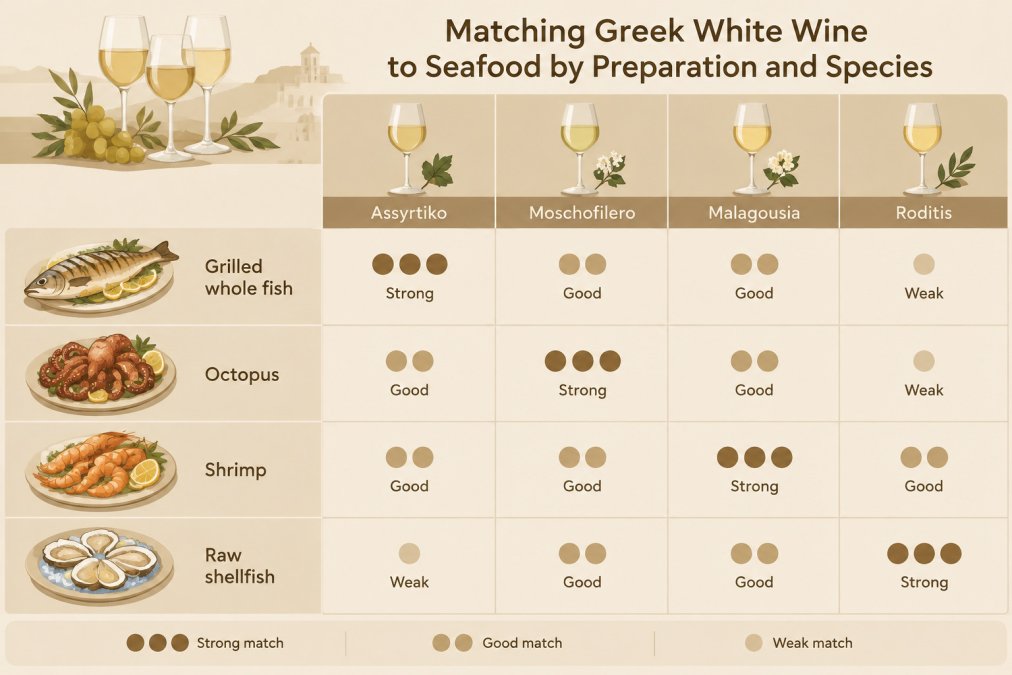
Raw and lightly cured seafood. Oysters, crudo, and ceviche want saline, high-acid whites that echo the sea. Reach for the Sigalas Assyrtiko or the Argyros Atlantis White. Avoid oaked or highly aromatic wines here, they bury the delicacy of raw shellfish.
Grilled whole fish (branzino, sea bream, snapper). Char, lemon, and olive oil need acidity to cut the smoke and fat. Assyrtiko is the strongest match; Malagousia works when the fish is dressed with herbs rather than heavy char.
Grilled octopus. Charred octopus with vinegar and olive oil is one of the few dishes that can handle Assyrtiko's firmness and salinity head-on. If the dressing is sweeter or tomato-based, step down to Roditis.
Fried seafood (calamari, smelts, shrimp). Batter and oil call for crisp acidity and modest body. Roditis is the value play; Moschofilero works if you want more perfume. A full-bodied or oaked white will feel heavy against fried food.
Shrimp and shellfish in tomato or garlic sauce. The sauce, not the shellfish, drives the pairing. Roditis or Vilana handle tomato's acidity; Malagousia suits garlic and butter preparations. Assyrtiko can work but may overpower a light garlic sauce.
Poached or steamed delicate fish (sole, cod, halibut). Keep the wine light and aromatic: Moschofilero or Malagousia. High-acid Assyrtiko can make delicate poached fish taste thin by comparison.
Richer preparations (butter sauces, crab cakes, lobster). Fuller texture helps. Malagousia's rounder mid-palate or a slightly older Assyrtiko balances richness better than a lean, young wine.
Two rules cover most of the chart: match acidity to richness (fat, char, and frying need more acid) and match aromatics to herbs (dill, parsley, and oregano reward aromatic whites).
Serving matters as much as the bottle. Serve these wines well chilled but not ice cold, because very low temperatures mute aroma and make acidity feel harsh. A standard white-wine glass is fine; a slightly wider bowl helps aromatic varieties like Malagousia and Moschofilero open up. If a pairing feels off, the usual culprits are serving temperature, an oaked bottling, or a sauce that is sweeter or spicier than the wine can handle.
Watch out: tomato sauce and vinegar dressings can make high-acid wines taste metallic, so taste the dish before committing the whole bottle to it.
The chart below maps common seafood preparations to the bottles this article recommends.
| Seafood preparation | Best wine from this article | Why it works |
|---|---|---|
| Raw and lightly cured seafood | Sigalas Assyrtiko or Argyros Atlantis White | Saline, high-acid wines echo the sea |
| Grilled whole fish | Assyrtiko | Acidity cuts char, lemon and olive oil |
| Grilled octopus | Assyrtiko | Firmness and salinity handle charred dishes |
| Fried seafood | Roditis or Moschofilero | Crisp acidity and modest body suit batter |
| Shrimp in tomato or garlic sauce | Roditis or Vilana | Tomato acidity is matched by the wine |
| Poached delicate fish | Moschofilero or Malagousia | Light, aromatic wines keep delicate fish in focus |
| Richer butter sauces and lobster | Malagousia or aged Assyrtiko | Fuller texture balances richness |
Alternatives to Assyrtiko and Serving Trade-Offs
If Assyrtiko is hard to find or too austere for your taste, Malagousia and Roditis are reasonable substitutes. Roditis is lighter and easier to drink on its own, but it has less grip for heavily grilled fish. Malagousia offers more texture but less acidity than Assyrtiko, so it works best with moderate preparations.
Serve these wines well chilled, but not ice cold, because very low temperatures mute aroma and make acidity feel harsher. If you are new to Greek restaurants, a first-timer's guide to ordering explains how to build a meal around these dishes. To see the grilled seafood and other dishes on our Greek restaurant menu, browse the options before you pick a bottle. Open bottles a short time before serving, and keep leftover wine refrigerated for a day or two. Expect some trade-offs: a wine that matches the fish perfectly may be more expensive, and the most aromatic styles can overpower very mild seafood.
Book Your Table and Pair Your Seafood at Parthenon
If you want to taste these pairings in person, Parthenon Greek Restaurant & Chevy Chase Lounge serves Greek dishes and seafood. You can reserve through Experience Greece in DC and ask our staff about the wine list when you arrive.
For a lighter start, browse the Greek appetizers guide before you order. Ask our staff about the wine list when you visit.
Frequently Asked Questions
What is the best white wine to pair with seafood?
For most seafood, a dry, high-acid white with mineral notes works best because acidity cuts through oil and brightens delicate fish. Among Greek wines, Assyrtiko is the most reliable choice: its citrus and saline character suits grilled fish, shrimp and raw shellfish alike. Sauvignon Blanc and dry Riesling are strong non-Greek options. Avoid heavily oaked whites, which can overpower lighter fish and make the wine taste flat next to lemon and herbs.
Does Assyrtiko pair well with seafood?
Yes. Assyrtiko is one of the most food-friendly seafood wines because its high natural acidity and minerality stand up to grilled octopus, whole fish and shrimp without masking them. It also handles lemon, olive oil and oregano, which are common in Greek seafood preparations. For richer, oilier fish such as grilled salmon, a slightly fuller white can work better, but Assyrtiko remains a dependable first choice for the table.
What kind of white wine pairs well with Greek food?
Greek food is built on olive oil, lemon, herbs and grilled meats and seafood, so wines with bright acidity and herbal or citrus notes fit best. Assyrtiko and Malagousia pair well with mezze and salads, while Moschofilero suits lighter dishes. The best white wine with Greek food is usually one that matches the dish's acidity rather than its richness. A crisp white pairs with most mezze, while a fuller white suits roasted dishes.
Should Greek seafood be paired with red or white wine?
White wine is the usual choice for Greek seafood, since its acidity complements lemon, olive oil and herbs without the tannin that can clash with fish. Red wine tends to make seafood taste metallic. Rosé or a light orange wine can be a reasonable middle ground for richer, grilled preparations, but for most fish, shellfish and octopus, a dry Greek white is the better match.