 listicle
Greek Lunch Options for Non-Seafood Eaters: 2026 Guide
Table of Contents
- Why Greek Lunch Works When You Don't Eat Seafood
- Meat-Based Greek Lunch Options: Souvlaki, Gyros, and More
- Greek Vegetarian Lunch Dishes That Satisfy
- Greek Cuisine for Picky Eaters: Simple, Familiar Flavors
- Traditional Greek Recipes for Home Cooks: Recreate Lunch at Home
- Decoding a Greek Lunch Menu: What to Look For (and Avoid)
- Frequently Asked Questions
Last Updated: September 23, 2026
Why Greek Lunch Works When You Don't Eat Seafood
Greek lunch options for non-seafood eaters are far more varied than most menus suggest. The cuisine leans on grilled meats, vegetables, legumes, and cheese, so skipping fish costs you almost nothing. At Parthenon Greek Restaurant & Chevy Chase Lounge, we have served this food since 1989, and our most popular lunch plates have never touched the water.
Meat-Based Greek Lunch Options: Souvlaki, Gyros, and More
Grilled meat is the backbone of a non-seafood Greek lunch. Souvlaki, gyros, and bifteki cover most of what you will want, and all three appear on nearly every lunch menu.
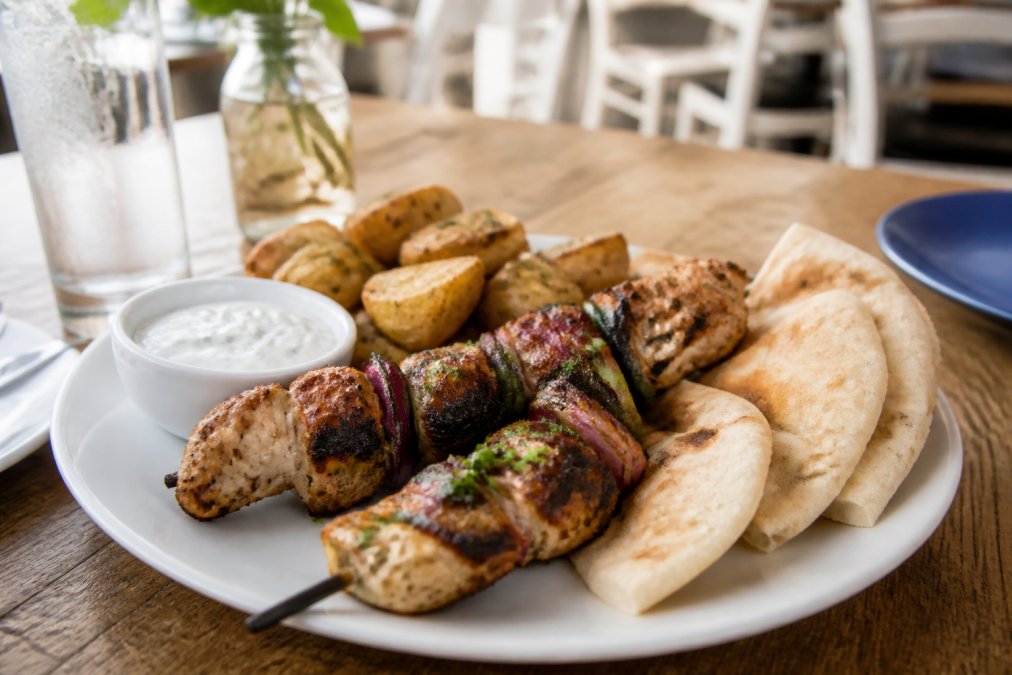
Souvlaki and Skewers: Ordering Tips for Lunch
Souvlaki is cubed meat marinated in olive oil, lemon, and oregano, then grilled on a skewer. Chicken and pork are standard. Ask whether it comes on the skewer or wrapped in pita; the wrapped version usually includes tomatoes, onions, and tzatziki.
Gyros and Pita Sandwiches: What to Ask For
Gyros is shaved meat, typically pork or chicken, served in pita with tomato, onion, and tzatziki. Tzatziki is yogurt, cucumber, garlic, and olive oil, no fish, but dairy, so it matters if you are avoiding yogurt.
Greek Vegetarian Lunch Dishes That Satisfy
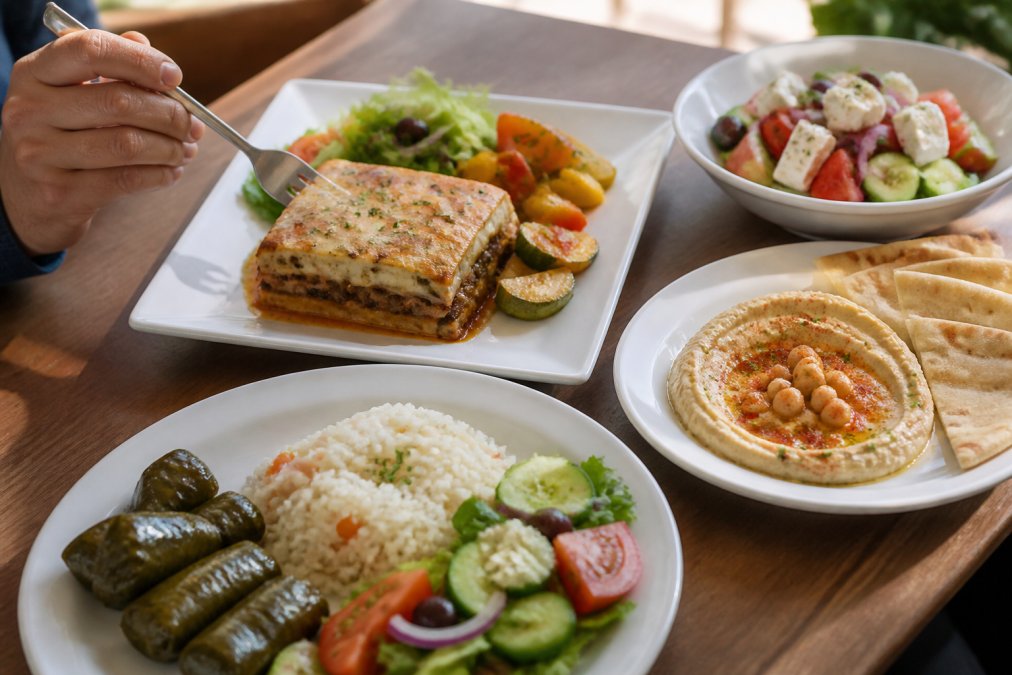
Greek vegetarian lunch dishes stand on their own rather than acting as sides for meat. Spanakopita, a spinach and feta pastry, and tiropita, its cheese-filled cousin, are both filling enough for a full meal.
The strongest vegetarian options on a typical lunch menu:
- Horiatiki, the village salad, made with tomato, cucumber, onion, olives, and a block of feta
- Spanakopita, layered phyllo with spinach and feta
- Gemista, tomatoes and peppers stuffed with rice and herbs
- Fava, a yellow split pea puree served with onion and olive oil
- Horta, boiled greens dressed with lemon and olive oil
- Dolmades, grape leaves stuffed with rice and herbs
Greek Cuisine for Picky Eaters: Simple, Familiar Flavors
Greek cuisine for picky eaters works because the core flavors are mild. Grilled chicken, rice, bread, potatoes, and cheese appear constantly, and none are aggressively seasoned.
- Grilled chicken skewers with rice instead of salad
- Pita bread with olive oil for dipping
- Roasted potatoes with lemon
- Plain feta and olives on the side
- Orzo, a small pasta that shows up in many lunch dishes
Traditional Greek Recipes for Home Cooks: Recreate Lunch at Home
The recipes below are built for a packed lunch, not a dinner party: they hold up in a container for four to six hours, taste fine at room temperature, and reheat without turning rubbery. Most Greek lunch dishes are naturally portable because they were designed to be eaten at room temperature with olive oil.
The Lunch-Portability Rule
Three factors decide whether a Greek dish survives a lunchbox: moisture, acid, and fat. Too much water (horiatiki dressed hours ahead) goes soggy; too much acid (lemon-heavy horta) gets bitter; the right fat (olive oil, feta) holds up best. Pack dressings and tzatziki separately and add them at the desk.
Souvlaki That Reheats Without Drying Out
Cube chicken thigh or pork shoulder, not breast or loin. Marinate in olive oil, lemon juice, garlic, and dried oregano for at least two hours, ideally overnight. Grill or pan-sear over high heat to 165°F for chicken and 145°F for pork, then rest five minutes before skewering.
Tzatziki That Doesn't Water Out by Noon
Grate a cucumber on the large holes, salt it with about half a teaspoon of kosher salt, let it sit ten minutes, then squeeze it dry in a clean kitchen towel, you should lose roughly half its weight in water. Mix with full-fat Greek yogurt, one grated garlic clove, a tablespoon of olive oil, and a splash of red wine vinegar.
Cold Dishes That Improve Overnight
Some Greek dishes taste better the next day, which makes them ideal for a make-ahead lunch:
- Fava, yellow split pea puree thickens overnight and is served at room temperature with olive oil and diced onion
- Gigantes, giant baked beans in tomato sauce deepen in flavor after a day in the fridge
- Briam, roasted zucchini, potato, and tomato in olive oil, good cold or reheated
- Gemista, stuffed tomatoes and peppers, served at room temperature in most Greek homes
- Dolmades, grape leaves stuffed with rice, served cold with lemon
| Dish | Make-Ahead Window | Best Packed | Reheat? |
|---|---|---|---|
| Souvlaki | 3 days | Skewers separate from pita | 30-45 sec, optional |
| Tzatziki | 2 days | Small sealed cup | No |
| Fava | 4 days | Flat container, oil on top | No, eat at room temp |
| Gigantes | 5 days | Sealed container with sauce | Yes, 60-90 sec |
| Spanakopita | 2 days | Foil, not plastic | Yes, 350°F for 8 min |
| Gemista | 4 days | Sealed container | Room temp preferred |
The Non-Seafood Ingredient Check at Home
When you cook at home, you control the hidden-seafood risk entirely. Read labels on two store-bought items: Worcestershire sauce (contains anchovy) and some fish sauce brands used in fusion Greek cooking. Neither belongs in a traditional recipe, but they show up in modern adaptations. Standard Greek pantry items, olive oil, lemon, oregano, garlic, feta, yogurt, tomatoes, rice, lentils, and beans, carry no seafood risk.
A Five-Minute Assembly Lunch
On a rushed morning, skip cooking entirely. A container with a block of feta, a handful of Kalamata olives, sliced tomato, cucumber spears, a hard-boiled egg, and two pieces of pita travels well, needs no reheating, and covers the same flavor profile as a full taverna plate. Add olive oil and lemon on the side, the fastest non-seafood Greek lunch you can make at home.
Decoding a Greek Lunch Menu: What to Look For (and Avoid)
Lunch menus are shorter than dinner menus, which makes them easier to scan, but they lean harder on prepped items like dips, dressings, and stocks where seafood hides. Here is how to read a Greek lunch menu in about sixty seconds.
How a Greek Lunch Menu Is Usually Organized
Most Greek lunch menus follow a predictable order, and knowing it tells you where the risk sits:
- Meze and dips, the highest-risk section, because taramasalata and some spreads contain fish roe
- Salads, usually safe, but dressings can hide anchovy
- Grill items (tis scharas), souvlaki, gyros, bifteki, lamb chops; almost always seafood-free
- Oven dishes (tis katsarolas or fournou), moussaka, pastitsio, gemista, briam; watch for fish stock in vegetable dishes
- Daily specials (imerisio), the wild card, always ask
- Sides (orektika), horta, gigantes, roasted potatoes; ask about broth
The Words That Signal Seafood
These appear on lunch menus and are worth memorizing:
- Garides, shrimp
- Kalamari, squid
- Bakaliaros, salt cod
- Gavros, anchovy
- Sardeles, sardines
- Psari, fish (general)
- Thalassina, seafood (general)
- Marida, small whitebait
- Octapodi, octopus
- Taramasalata, fish roe dip
Safe words: kotopoulo (chicken), hirino (pork), moschari (beef), arni (lamb), feta, fasolia (beans), and revithia (chickpeas).
Where Seafood Actually Hides on a Lunch Menu
1. Dips and spreads. Taramasalata is the obvious one, pink, creamy, made from fish roe. Some restaurants also blend anchovy into melitzanosalata (eggplant dip) or tirokafteri (spicy feta dip) for depth. If a dip is pink or briny, ask.
The Three Questions That Cover Every Lunch Menu
You do not need to memorize the whole vocabulary list. Three questions handle almost every situation:
- "Does this dish contain any fish, shellfish, fish sauce, or fish stock?", covers the main dish and the sauce
- "Is the dressing made with anchovy or Worcestershire?", covers salads
- "What is on the meze platter, and which items have fish roe?", covers the shared plate
A Safe Default Lunch Order
If you want to skip the questions entirely, this order is seafood-free at virtually every Greek restaurant: a chicken or pork souvlaki plate with rice or roasted potatoes, a side of tzatziki, and a horiatiki with olive oil and lemon on the side. Add fava or gigantes for a vegetable. Nothing touches the sea, and nothing requires a substitution.
Frequently Asked Questions
What do Greeks typically eat for lunch?
Greek lunches often center on meze-style small plates or a main dish like souvlaki, gyros, or a hearty salad. Popular choices include horiatiki (Greek salad with feta), spanakopita, and grilled meat skewers. Many Greeks enjoy a light lunch with pita, dips like tzatziki, and olives. For non-seafood eaters, there are plenty of meat and vegetarian options, such as lamb, chicken, or eggplant dishes. The Mediterranean diet emphasizes fresh vegetables, olive oil, and grains, so lunch is usually satisfying but not overly heavy.
What are some traditional Greek lunch ideas for non-seafood eaters?
Traditional Greek lunch ideas without seafood include gyros, souvlaki, moussaka, pastitsio, and gemista (stuffed tomatoes and peppers). Vegetarian options like spanakopita, tiropita, and fava (yellow split pea dip) are also common. For a lighter meal, try a horiatiki salad with feta and olives, or a plate of dolmades (stuffed grape leaves). Many tavernas serve these dishes daily, and they are easy to find on lunch menus. Pair with pita bread and tzatziki for a complete meal.
What can a picky eater eat in Greece?
Picky eaters can enjoy simple Greek dishes like grilled chicken skewers, plain pita bread, and tzatziki. French fries (patates) are common, as are mild cheeses like kasseri. Avoid dishes with strong herbs or unfamiliar textures. Souvlaki without onions or tomatoes is a safe bet. Many restaurants offer plain pasta or rice. If you're unsure, ask for a side of olive oil and lemon to adjust flavors. Greek cuisine for picky eaters often means sticking to grilled meats, bread, and mild dips.
Are there many non-seafood options in traditional Greek cuisine?
Yes, traditional Greek cuisine has abundant non-seafood options. Meat dishes like gyros, souvlaki, moussaka, and pastitsio are staples. Vegetarian choices include spanakopita, gemista, and horta (boiled greens). Meze plates often feature feta, olives, and dips like tzatziki and eggplant salad. Lentils and beans are used in soups and salads. Even in coastal areas, tavernas serve grilled meats and vegetable dishes. For lunch, you can easily avoid seafood and still enjoy a filling, authentic meal.