 how-to
Is Mediterranean Catering Good for Weddings?
Table of Contents
- Why Mediterranean Catering Works for Weddings
- Mediterranean Wedding Menu Ideas That Guests Love
- Handling Wedding Catering Dietary Restrictions
- Fresh Ingredients and Quality Matter
- Wedding Catering Cost Per Person and Budget Planning
- Service, Logistics, and Guest Experience
- Is Mediterranean Catering Right for Your Wedding?
- Frequently Asked Questions
Last Updated: October 18, 2026
Why Mediterranean Catering Works for Weddings
Is Mediterranean catering good for weddings? Yes, especially when you want food that feels special and approachable. Fresh ingredients, bold flavors, and adaptable dishes work for almost any guest list.
At Parthenon Greek Restaurant & Chevy Chase Lounge, Mediterranean food sets the right wedding tone: not pretentious, not heavy, but warm and inviting.
Here's what makes Mediterranean catering stand out:
- Fresh ingredients shine. Olive oil, lemon, fresh vegetables, and herbs make every dish taste alive.
- Flexibility for dietary needs. Vegetarian options, seafood, and lean proteins mean no guest feels left out.
- Crowd-pleasing flavors. Mediterranean food tastes familiar enough to comfort guests and interesting enough to impress them.
- Visual appeal. Colorful mezze platters and carefully plated entrees look beautiful in photos.
- Variety without complexity. You can offer many options without needing an enormous kitchen or complicated logistics.
Mediterranean wedding catering balances tradition with accessibility: thoughtful without feeling risky.
Mediterranean Wedding Menu Ideas That Guests Love
For Mediterranean catering at your wedding, the menu is the centerpiece. Combine appetizers that set the tone with entrees that satisfy different preferences.
Appetizers and Mezze Platters
Start with mezze, the Mediterranean tradition of sharing small plates. A well-designed platter gives guests something to enjoy while you handle photos or cocktails.
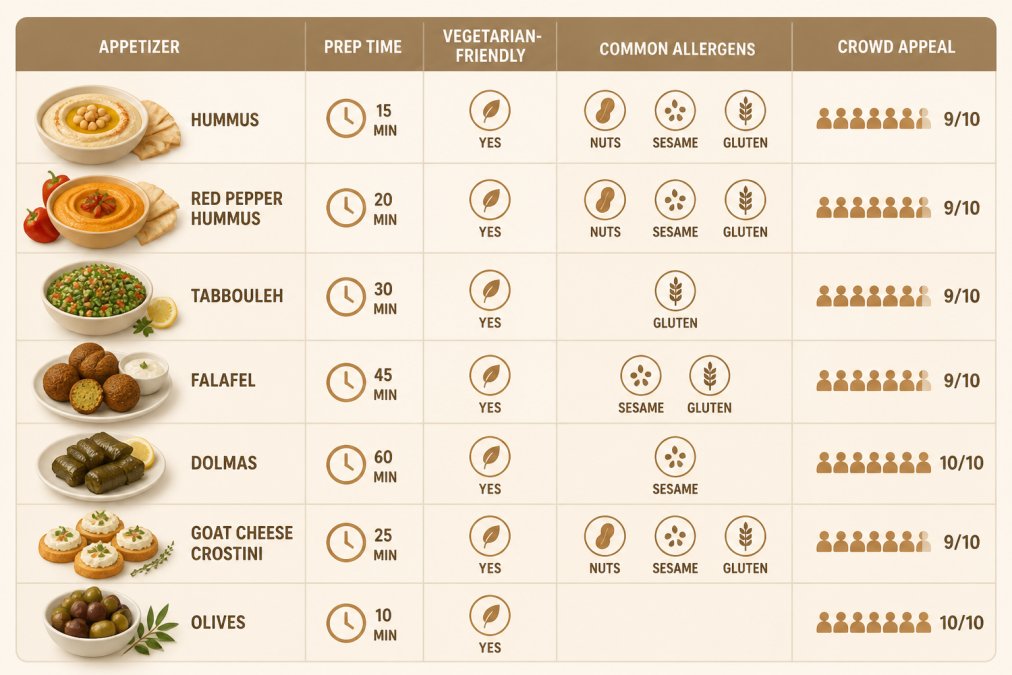
Essential mezze items include hummus, tabbouleh, falafel, dolmas, and olives in several varieties. Add pita bread for everything to come together.
Entrees and Main Dishes
The main course is where Mediterranean catering shows its range.
Grilled lamb is the signature Mediterranean choice. Marinated in olive oil, lemon, garlic, and oregano, then grilled to medium-rare, it's tender and flavorful; leg or chops both work for weddings.
Grilled fish appeals to guests who want something lighter. Branzino, sea bass, or salmon respond well to olive oil, lemon, fresh herbs, and a touch of garlic.
Chicken is underrated: marinated like the lamb, grilled breast stays moist and pairs well with Mediterranean sides.
Vegetarian options shouldn't feel like an afterthought. A well-prepared vegetable moussaka or stuffed portobello mushrooms with herbs and cheese can be a standout dish of the evening.
Handling Wedding Catering Dietary Restrictions
Every wedding has guests with dietary needs. Mediterranean catering handles this better than most cuisines because the foundation is naturally flexible.
Collect dietary information early: vegetarian, vegan, gluten-free, nut allergies, and shellfish allergies. Mediterranean catering can accommodate many of these, but your caterer needs advance notice.
Vegetarian guests are easiest. Mezze platters work perfectly. Vegetable dishes, cheese-based options, and legume-based dishes are central to Mediterranean cooking, not an addition.
Vegan guests need advance planning. Skip dairy-based dips; focus on olive-oil-based hummus, tabbouleh, falafel, dolmas (check they use vegetable oil), grilled vegetables, and legumes.
Gluten-free guests need you to verify falafel is chickpea-only (not mixed with flour), that breaded items are separate, and that gluten-free pita is available. Clear communication handles this.
Nut allergies matter because some hummus recipes include pine nuts and some mezze items contain sesame. Ask your caterer directly about every ingredient.
Shellfish allergies require separate prep areas if your menu includes seafood, so your caterer needs cross-contamination systems in place.
The key is transparency: tell your caterer every restriction upfront and ask how they prevent cross-contamination.
Fresh Ingredients and Quality Matter
Mediterranean catering is only as good as its ingredients. This cuisine doesn't hide behind heavy sauces: fresh vegetables, quality olive oil, and proper proteins are everything.
When evaluating a Mediterranean caterer, ask about sourcing: imported Greek products and whether dips and sauces are made in-house or bought pre-made.
Parthenon Greek Restaurant & Chevy Chase Lounge uses imported Greek products and extra virgin olive oil because we believe the foundation matters. You taste the difference immediately.
Fresh ingredients also hold up better during your event.
Ask about timing: when food is prepared, how it's transported and kept hot, and whether it's plated in advance or served from warming stations.
Wedding Catering Cost Per Person and Budget Planning
Mediterranean wedding catering cost depends on guest count, menu complexity, service style, and whether rentals and staff are included. Build a budget from the bottom up.
Separate food from everything else. Quotes for catering often break into these pieces:
- Food cost per person, the edible menu: mezze, entrees, sides, bread, and dessert.
- Service staff, servers, captains, and kitchen staff, usually charged hourly or as a percentage of food cost.
- Rentals, plates, glassware, linens, chafing dishes, and sometimes tables and chairs if the venue does not provide them.
- Bar service, often quoted separately from food, whether hosted, limited, or consumption-based.
- Setup, delivery, and cleanup, sometimes bundled, sometimes a line item.
- Tax and service charge, commonly added on top of the food and labor subtotal.
To get a quote, give the caterer these details up front:
- Total guest count and a realistic final count deadline
- Menu selections.
- Service style.
- Date, start time, and service time
- Venue address and kitchen access.
- Whether you need rentals, bar service, or staff for setup and cleanup
Ask for an itemized written quote.
Several factors can influence the total cost:
- Service style. Buffet and family-style service generally require fewer servers per guest than plated service, which can reduce labor. Plated service adds staff and coordination but gives consistent portions and presentation.
- Menu breadth. Two entrees plus a strong mezze spread usually costs less than four entrees, and it is easier to execute well. Adding a third entree adds food cost and kitchen complexity.
- Guest count. Smaller weddings often carry a higher per-person cost because fixed costs like delivery, setup, and a minimum staff count are spread across fewer guests.
- Season and day. Peak-season Saturdays and evening events typically cost more than off-season dates or daytime events, largely because demand and staffing rates change.
- Rentals and bar. These are the lines most likely to surprise couples. Confirm whether the venue supplies tables, chairs, and glassware before you assume the caterer must.
Finally, ask what happens if the guest count changes. Confirm the final-count deadline and the policy for late additions.
Service, Logistics, and Guest Experience
Service style shapes the entire wedding experience, and the right choice depends on venue, guest count, and atmosphere.
Plated service means each guest receives a prepared plate. It looks formal and elegant, gives consistent portions, and works well for seated dinners. It requires more servers and tighter kitchen coordination, so confirm the caterer has the staff and equipment to plate for your guest count within your service window.
Buffet service means guests serve themselves from stations. It is more casual and interactive, and guests can choose portion sizes. Buffet service generally needs fewer servers than plated service but requires clear flow and signage so lines do not stall. A common approach is to open two sides of a buffet or use two identical lines once the guest count grows, which keeps wait times reasonable.
Family-style service places platters on each table for guests to pass. It feels generous and communal and can reduce plated labor while keeping a seated-dinner feel, but it requires enough platters and utensils per table and a replenishment plan.
Passed appetizers work well for cocktail hour. Servers circulate with trays, which encourages mingling. Passed service needs enough servers to reach guests during the cocktail window; too few servers and trays empty faster than they can be refilled.
Combination service mixes approaches, such as passed appetizers during cocktail hour followed by a buffet or plated dinner. It gives variety and keeps the event moving, but it requires the caterer to plan two service phases and the staffing for each.
Logistics matter. Your caterer needs to know:
- Venue layout, kitchen access, and whether there is a warming kitchen on-site
- Parking and load-in access.
- Setup and breakdown windows allowed by the venue
- When guests arrive and when you want service to begin
- Whether you need bar service or food only
- Where buffets or stations will sit relative to seating and traffic flow
Guest-count and portion planning is important. Ask how the caterer sets quantities for mezze, entrees, and sides, and how they account for guests who eat more or skip dishes.
Food safety is part of service quality. Hot dishes should be held hot and cold dishes held cold throughout service.
Execution is what guests remember: food at the right temperature, stocked stations, and service that keeps the evening flowing without feeling rushed.
Is Mediterranean Catering Right for Your Wedding?
Mediterranean catering is right for your wedding if you want food that tastes fresh, feels special, and works for diverse guests, especially if you value quality ingredients and authentic flavors over trendy presentations.
Mediterranean catering might not be the best fit if your guests strongly prefer familiar American cuisine.
Consider these questions:
- Do your guests enjoy bold, flavorful food?
- Do you have dietary restrictions or preferences to accommodate?
- Do you want a warm, inviting atmosphere or something more formal?
- Is fresh, quality ingredients important to you?
- Do you want variety on the menu?
If you answered yes to most of these, Mediterranean catering is worth serious consideration.
When you're ready to plan, talk to a caterer who understands Mediterranean food deeply. They should ask about your vision, guests, budget, and logistics.
At Parthenon Greek Restaurant & Chevy Chase Lounge, we've been serving authentic Mediterranean food since 1989. We understand how to bring that tradition to your wedding in a way that feels personal and memorable. Book a table with us to discuss your catering needs, or reach out to learn more about how we can make your wedding dinner something your guests will remember.
Mediterranean catering brings authenticity, fresh ingredients, and warm hospitality to your wedding. When you choose a caterer who understands the cuisine and your vision, the result is a meal that feels both special and genuinely welcoming. Parthenon Greek Restaurant & Chevy Chase Lounge brings decades of experience with traditional Mediterranean preparation, imported Greek products, and warm hospitality. Experience Greece in DC and let us help you plan a wedding dinner your guests will talk about for years.
Frequently Asked Questions
Is Mediterranean food a good choice for a wedding reception?
Yes. Mediterranean catering offers fresh vegetables, lean proteins, and adaptable dishes that appeal to most guests. The cuisine accommodates vegetarian preferences, includes crowd-pleasing flavors, and works well for both buffet and plated service. Mediterranean menus also allow customization for dietary restrictions, making it practical for events with mixed dietary needs.
What Mediterranean dishes work well for a wedding buffet?
Mezze platters with hummus, olives, and pita are ideal starters. For mains, grilled lamb, fresh seafood, and vegetarian options like falafel and tabbouleh work well during service. Appetizers such as dolmas work for either stations or passed service. These dishes offer visual appeal.
How can you accommodate dietary restrictions with Mediterranean wedding catering?
Mediterranean cuisine naturally supports multiple dietary needs. Vegetarian options include hummus, falafel, tabbouleh, and grilled vegetables. Fish and lean proteins suit guests. Gluten-free adaptations work for bread-based items. A professional caterer will identify allergens and offer alternatives to ensure everyone has suitable options.
What makes Mediterranean catering different from other wedding options?
Mediterranean catering emphasizes fresh ingredients, lighter preparations, and menu variety in a single cuisine. The cuisine's adaptability makes it suitable for diverse guest preferences and cultural celebrations.