 ultimate-guide
Is Greek Food Healthy for Brunch? A Complete Guide
Table of Contents
- Is Greek Food Healthy for Brunch? The Evidence
- Traditional Greek Breakfast and Brunch Dishes
- Building a Healthy Greek Breakfast Plate
- Greek Yogurt Breakfast Ideas and Nutrition
- Healthy Greek Vegetarian Dishes for Brunch
- Nutrition Breakdown of Common Greek Brunch Options
- Smart Ordering and Preparation Choices
- Frequently Asked Questions
Last Updated: October 8, 2026
Is Greek Food Healthy for Brunch? The Evidence
Is Greek food healthy for brunch? The short answer is yes, when you approach it thoughtfully. Greek cuisine centers on olive oil, fresh vegetables, lean proteins, and whole grains, which align with what nutritionists recommend for a balanced meal. But like any cuisine, the healthfulness depends on what you order and how it's prepared.
At Parthenon Greek Restaurant & Chevy Chase Lounge, we've served authentic Greek brunch for decades, and we've watched guests discover that Mediterranean flavors and nutritious eating go hand in hand. The challenge isn't whether Greek food can be healthy, it's understanding which dishes offer the best nutritional value and how to build a plate that keeps you satisfied without excess.
This guide breaks down the evidence around Greek brunch, shows you how to evaluate common dishes, and gives you practical strategies for making choices that align with your health goals. Whether you're a regular or visiting for the first time, you'll learn how to navigate a Greek menu with confidence.
Traditional Greek Breakfast and Brunch Dishes
Greek breakfast culture looks different from what many Americans expect. Rather than heavy, sweet pastries, traditional Greek brunch emphasizes savory flavors, fresh ingredients, and dishes that have been part of Mediterranean life for generations.
Strapatsada is a cornerstone dish: scrambled eggs cooked with tomatoes, onions, and sometimes feta cheese. It's simple, protein-rich, and built on vegetables. The dish typically uses olive oil for cooking, which adds beneficial monounsaturated fats. A typical serving provides substantial protein from the eggs while keeping calories moderate when prepared without excess oil.
Spanakopita, the spinach and feta pie, appears frequently on brunch menus. Spinach delivers iron, calcium, and antioxidants. Feta adds protein and flavor without requiring large quantities. The phyllo pastry wrapping contains fat from butter or oil, so portion size matters, a slice or two fits well into a balanced meal, but the pastry does add calories that stack up quickly.
Saganaki, fried cheese, represents the indulgent end of the spectrum. It's delicious but calorie-dense due to frying. Treating it as an appetizer or side rather than a main dish keeps it in proportion.
Avgolemono soup, made with eggs, lemon, and chicken or vegetable broth, offers protein and bright flavor with relatively few calories. The lemon juice adds vitamin C and acidity that aids digestion and nutrient absorption.
Bread appears at most Greek meals. Pita bread is whole grain when available, providing fiber and B vitamins. Pairing it with olive oil and herbs (rather than butter) keeps the fat profile favorable.
Building a Healthy Greek Breakfast Plate
The foundation of a healthy Greek brunch isn't about picking one "perfect" dish, it's about combining elements that give you protein, fiber, healthy fats, and vegetables.
Start with a protein source. Eggs in any form (scrambled, boiled, in a frittata) deliver complete protein and choline, which supports brain health. Greek yogurt offers protein and probiotics. Grilled fish or shrimp provides lean protein and omega-3 fatty acids. Even a modest portion of feta or other cheese contributes protein and satiety.
Add vegetables. A Greek salad with tomatoes, cucumbers, and olives covers multiple vegetable servings in one dish. Spinach in spanakopita or saganaki counts. Roasted or grilled vegetables like eggplant or zucchini add volume and nutrients with minimal calories. Vegetables provide fiber, which slows digestion and keeps blood sugar stable.
Include a whole grain or starchy vegetable. A slice of whole grain pita, a small portion of potatoes (boiled or roasted, not fried), or a serving of legumes like gigantes plaki (giant beans in tomato sauce) provide sustained energy and fiber. These carbohydrates pair well with protein and fat to create satiety that lasts through the morning.
Finish with healthy fat. Olive oil is the backbone of Greek cooking and provides polyphenols and monounsaturated fats linked to cardiovascular health. A drizzle on a salad, a dip for bread, or the cooking medium for vegetables counts. Olives and nuts (if available) add fat and flavor without excess calories.
A practical example: Strapatsada with whole grain pita, a side Greek salad, and a small glass of fresh juice creates a balanced plate with protein, vegetables, whole grains, and healthy fat. You feel full, your blood sugar stays steady, and you've covered multiple nutrient categories.
Greek Yogurt Breakfast Ideas and Nutrition
Greek yogurt stands out in Greek brunch culture for good reason. It contains roughly twice the protein of regular yogurt because of the straining process that removes whey. A single-serving container often provides 15-20 grams of protein, which supports muscle maintenance and keeps you satisfied.
The probiotics in yogurt support digestive health. Live and active cultures help maintain a healthy gut microbiome, which influences everything from digestion to immune function. Choose plain yogurt over sweetened varieties, flavored yogurts often contain added sugars that undermine the nutritional advantage.
Pair Greek yogurt with fruit for natural sweetness and fiber. Berries add antioxidants and minimal sugar. A drizzle of honey adds flavor and quick-acting carbohydrates. Nuts or granola provide crunch and additional protein and healthy fats. This combination gives you protein, carbohydrates, healthy fats, and fiber in one bowl.
Greek yogurt also works as a base for savory applications. Mixed with cucumber, garlic, and herbs, it becomes tzatziki, a cooling sauce that pairs with vegetables, bread, or grilled proteins. This shifts yogurt from dessert to a savory component of a balanced meal, which many find more satisfying at brunch.
The key distinction: Greek yogurt is nutrient-dense, but portion size matters. A large bowl with granola and honey can exceed 400 calories quickly. A moderate serving (about 6 ounces) with fruit and minimal added sweetener provides nutrition without excess.
Healthy Greek Vegetarian Dishes for Brunch
Greek cuisine offers substantial vegetarian options, which matters for guests avoiding meat or looking to build plant-forward meals.
Gigantes plaki, large lima beans stewed in tomato sauce with onions and garlic, delivers plant-based protein and fiber. A single serving provides 8-12 grams of protein depending on portion, along with resistant starch that feeds beneficial gut bacteria.
Dolmades, grape leaves stuffed with rice, herbs, and sometimes pine nuts, offer a different texture and flavor profile. They're relatively light, though the oil used in cooking adds calories. Eating them with lemon juice (common in Greek preparation) adds flavor without calories and may support nutrient absorption.
Horta, simply boiled greens (often wild greens or spinach) served with lemon and olive oil, represents the simplest preparation. It's vegetables, healthy fat, and acid, nothing else. The simplicity means you taste the quality of the olive oil and the earthiness of the greens.
Melitzanosalata, an eggplant dip, combines roasted eggplant with olive oil, lemon, and garlic. Eggplant contains nasunin, an antioxidant in the skin. The dip works with bread, vegetables, or as a side to other dishes. It's calorie-moderate when the oil isn't excessive.
Salade Horiatiki, the Greek salad with tomatoes, cucumbers, olives, onions, and feta, is vegetarian (or vegan without the cheese) and nutrient-dense. The variety of vegetables provides different micronutrients. Olives add healthy monounsaturated fat. Feta adds protein and calcium. The lemon-oil dressing is simple and flavorful.
These dishes share a pattern: they rely on vegetables, healthy fats (olive oil), and herbs rather than heavy sauces or fried preparations. Building a vegetarian brunch around two or three of these creates a satisfying, nutritious meal.
Nutrition Breakdown of Common Greek Brunch Options
Understanding what you're actually eating helps you make choices aligned with your goals. Here's how common Greek brunch dishes stack up nutritionally.
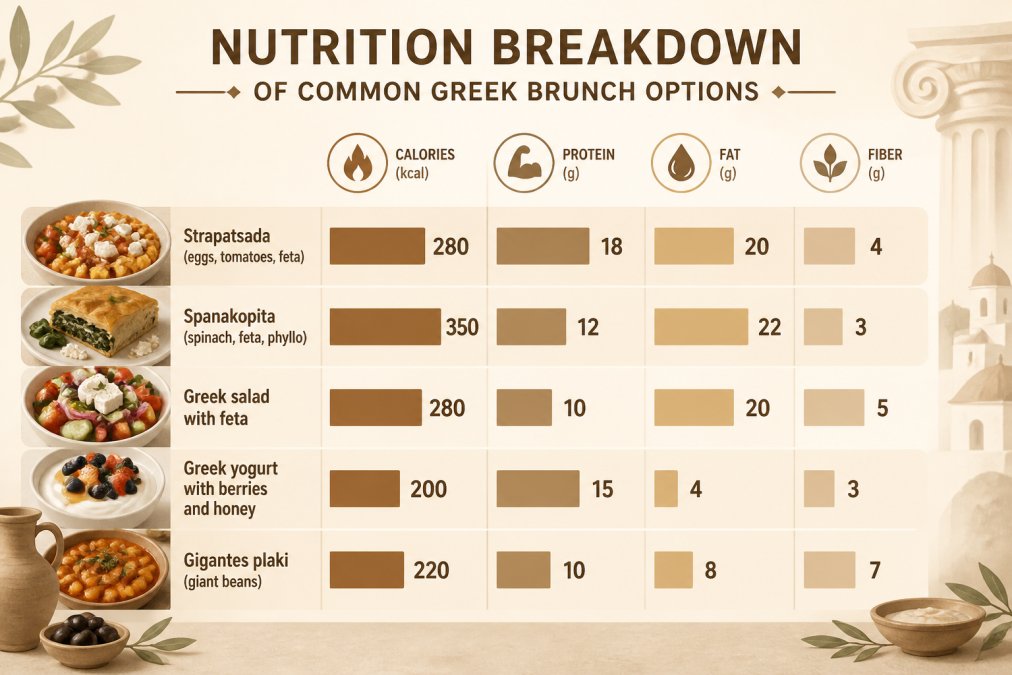
Strapatsada (scrambled eggs with tomatoes and feta) typically provides around 280 calories per serving, with 18 grams of protein and 20 grams of fat. The protein comes from eggs; the fat is primarily from olive oil and feta. The tomatoes add fiber and vitamin C.
Spanakopita ranges from 300-400 calories depending on size and phyllo thickness. It delivers 12-15 grams of protein from spinach and feta, with 20-25 grams of fat from the pastry. The spinach contributes iron, calcium, and antioxidants. The phyllo adds calories but also creates the dish's characteristic texture.
Greek salad with feta (without added oil beyond the dressing) comes in around 280 calories with 10 grams of protein and 20 grams of fat. The vegetables provide fiber (5+ grams), vitamins, and minerals. The feta adds saltiness and satiety.
Greek yogurt with berries and a drizzle of honey stays under 200 calories with 15 grams of protein and minimal fat from the yogurt itself. Berries add fiber and antioxidants. Honey adds quick carbohydrates. This works as a standalone breakfast or as part of a larger meal.
Gigantes plaki (giant beans in tomato sauce) provides around 220 calories with 10 grams of plant-based protein and 7-8 grams of fiber. The beans are the protein source; the tomato sauce adds lycopene and flavor. This is a filling, plant-forward option that pairs well with bread.
The pattern: Greek dishes tend to cluster in the 200-350 calorie range for a reasonable serving, with protein ranging from 10-20 grams depending on the dish.
Smart Ordering and Preparation Choices
Knowing the dishes is half the battle. The other half is understanding how preparation methods and portion choices affect the final nutritional profile.
Ask about cooking oil. Olive oil is the standard in Greek cooking, which is favorable. But the quantity matters. A generous pour of oil adds 120 calories per tablespoon.
Request whole grain bread when available. White pita is the default, but whole grain versions provide more fiber and a lower glycemic impact.
Build your own plate when possible. Many Greek restaurants offer mezze-style dining or allow you to order multiple small dishes. This gives you control over composition.
Manage portion of cheese. Feta is delicious and nutrient-dense, but it's calorie-concentrated. A tablespoon or two on a salad or in a dish adds flavor without excess.
Pair fried items with vegetables. If you order spanakopita or saganaki, balance it with a large salad or vegetable side.
Watch bread consumption. Pita bread is easy to eat in quantity, especially when warm and served with oil or butter for dipping. One slice with a meal is reasonable; three slices becomes a significant carbohydrate load.
Choose grilled or boiled proteins over fried. Grilled fish, boiled eggs, or roasted chicken provide protein without the added calories from frying.
Request lemon and herbs instead of extra oil. Lemon juice adds flavor and acidity (which aids digestion) without calories. Fresh herbs add complexity without calories. These are free ways to enhance flavor while keeping the nutritional profile intact.
Greek food is healthy for brunch when you understand the components and make intentional choices. The Mediterranean approach, vegetables, olive oil, lean proteins, whole grains, and herbs, aligns with what nutrition science supports.
Ready to experience Greek brunch done right? Experience Greece in DC at Parthenon Greek Restaurant & Chevy Chase Lounge, where we've built our menu around these principles, using imported Greek products and extra virgin olive oil to deliver authentic flavors without compromise.
Frequently Asked Questions
Is Greek food healthy for brunch?
Greek food can be a healthy brunch choice when you focus on dishes built around vegetables, olive oil, lean proteins, and whole grains. The Mediterranean diet, central to Greek cuisine, emphasizes heart-healthy fats, fiber, and fresh ingredients. However, some Greek brunch items like pastries and fried dishes are calorie-dense. The key is selecting whole-food-based options and being mindful of portion sizes. Many traditional Greek breakfast plates combine protein, vegetables, and healthy fats in balanced proportions.
What makes a healthy Greek breakfast plate?
A balanced Greek breakfast plate typically includes three components: a protein source (eggs, Greek yogurt, or legumes), vegetables (tomatoes, spinach, or eggplant), and healthy fat (olive oil or olives). Add whole-grain bread or legumes for fiber. Strapatsada (scrambled eggs with tomatoes), paired with a side of olives and whole-wheat pita, is a classic example. This combination provides sustained energy, supports heart health, and keeps you full longer than refined-carb-heavy breakfasts.
Are Greek yogurt breakfast ideas a good choice for brunch?
Greek yogurt is an excellent brunch foundation. It's high in protein, supports digestion, and pairs well with Mediterranean ingredients. Top it with fresh fruit, nuts, honey, and granola for a balanced meal. You can also use it as a base for tzatziki-style bowls with cucumber and herbs. Greek yogurt's creamy texture and nutritional profile make it more satisfying than many other dairy options, and it aligns naturally with Mediterranean breakfast traditions.
What are healthy Greek vegetarian brunch options?
Vegetarian Greek brunch dishes include spanakopita (spinach and feta pie, though often fried, baked versions exist), gigantes plaki (giant beans in tomato sauce), Greek salads with feta, vegetable-based mezze platters, and egg dishes like Strapatsada. Combine these with whole-grain bread, olives, and fresh fruit. Legume-based soups like lentil soup provide protein and fiber without meat. These options deliver the Mediterranean diet's health benefits while respecting vegetarian preferences.