 how-to
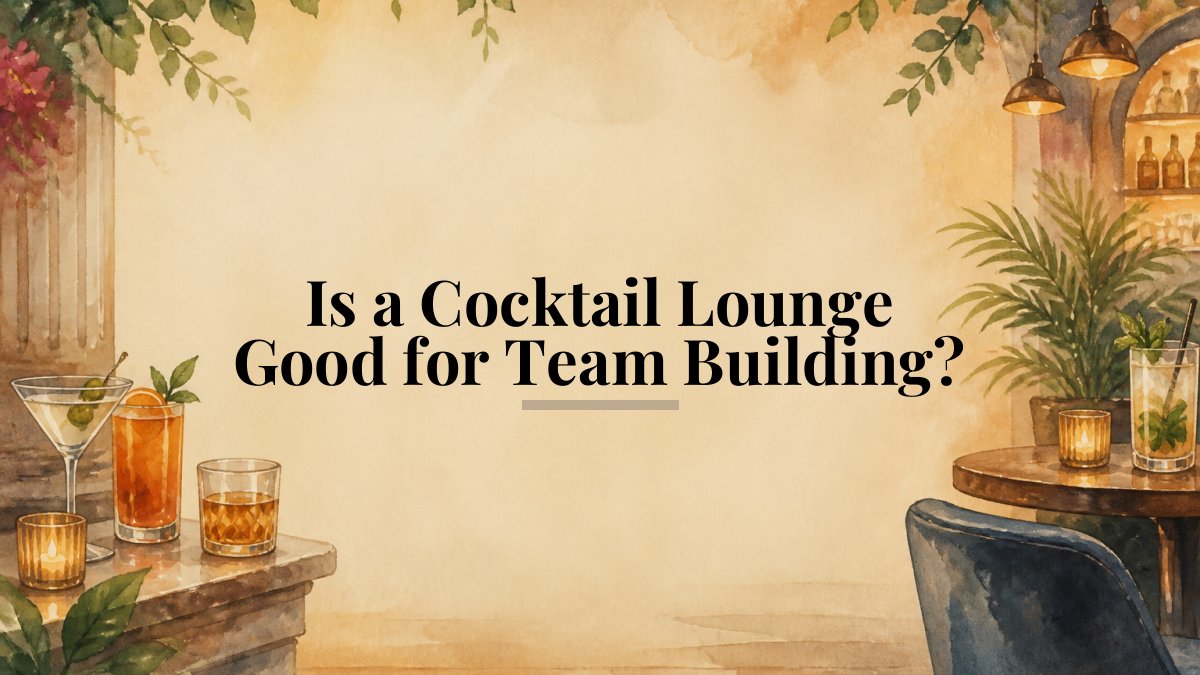
Is a Cocktail Lounge Good for Team Building?
Table of Contents
- Pros of Using a Cocktail Lounge for Team Building
- Cons of Using a Cocktail Lounge for Team Building
- Team-Building Activities at a Bar That Actually Work
- Non-Alcoholic Team-Building Activities for Inclusive Events
- How Long Should a Team-Building Event Last?
- Team-Building Event Planning Checklist for Cocktail Lounges
- Making Your Cocktail Lounge Event Successful
- Frequently Asked Questions
Last Updated: October 12, 2026
Pros of Using a Cocktail Lounge for Team Building
Whether is a cocktail lounge good for team building depends on your team's needs, but it can be an excellent venue when you want a relaxed, social atmosphere where colleagues connect naturally. The informal setting encourages conversation and breaks down workplace hierarchy in ways structured activities often cannot.
The key advantage is the built-in social environment. A lounge's ambiance, dim lighting, music, and comfortable seating create an inviting space where people gravitate toward conversation. Unlike conference rooms, cocktail lounges feel like a destination rather than an obligation.
At Parthenon Greek Restaurant & Chevy Chase Lounge, the welcoming atmosphere and handcrafted cocktails can become the backdrop for genuine connection.
Food and beverage options add value. A quality cocktail lounge pairs drinks with quality food, whether small plates, appetizers, or full catering, keeping people engaged and comfortable longer. Non-drinkers can enjoy mocktails and food without feeling excluded.
The venue does much of the work for you. You don't need elaborate activities or a facilitator; the lounge's atmosphere, staff hospitality, and social environment naturally facilitate bonding. This makes planning simpler and often more cost-effective than hiring an external team-building company.
Cons of Using a Cocktail Lounge for Team Building
Not every team or situation suits a cocktail lounge. Understanding the limitations helps you decide if it's right for your group.
Alcohol can create uncomfortable dynamics. Even with mocktails available, a cocktail lounge's primary focus is drinks. Some team members may feel pressured to drink, uncomfortable around alcohol, or prefer to avoid alcohol-focused environments, leaving non-drinkers feeling like outsiders rather than full participants.
Noise levels can interfere with meaningful conversation. Many lounges prioritize music and ambiance, creating a lively atmosphere but making genuine dialogue difficult. If your goal is deep connection or important conversations, background noise may work against you.
Accessibility can be an issue. Cocktail lounges often feature dim lighting, stairs, narrow spaces, or standing-room layouts that don't accommodate everyone equally. Colleagues with mobility challenges, hearing difficulties, or sensory sensitivities may struggle to participate fully.
Alcohol policies and liability concerns matter for employers. Some companies restrict or prohibit alcohol at company events due to liability, insurance, or workplace policies. Even if permitted, you'll need responsible consumption practices and clear communication about expectations.
Not all teams benefit equally from this format. Introverted team members may find a cocktail lounge overwhelming rather than bonding-friendly, and some prefer structured activities to informal socializing. A one-size-fits-all approach often leaves some people out.
Team-Building Activities at a Bar That Actually Work
The best team-building activities at a cocktail lounge combine the venue's natural social environment with intentional engagement. Here's what works.
Mixology classes turn the lounge into an interactive experience. A bartender teaches your team to make signature cocktails or classic drinks, giving people something to do together and generating natural conversation. Everyone leaves with a new skill and a sense of accomplishment.
Guided tastings work similarly. Whether wine, craft spirits, or specialty mocktails, a guided tasting creates structure within the informal setting. A sommelier or bartender explains flavor profiles, ingredients, and techniques, transforming casual drinking into a shared experience.
Speed networking rotations use the lounge's social setup. Organize brief, structured conversations between team members who don't typically interact, with a timer set for 5-10 minutes per conversation before rotating.
Collaborative challenges add playfulness. Organize a friendly competition: cocktail creation contests, trivia nights, or team games. These break the ice and create shared memories, with the lounge as the backdrop for bonding through light competition and laughter.
Story-sharing sessions work in smaller groups. Set aside time for team members to share professional wins, personal milestones, or lessons learned. The lounge's relaxed atmosphere makes people more willing to open up than in an office, since real connection happens through authentic conversation.
Non-Alcoholic Team-Building Activities for Inclusive Events
Creating an inclusive team-building experience means offering meaningful activities that don't center on alcohol. A quality cocktail lounge can support this.
Mocktail creation workshops mirror mixology classes but focus entirely on non-alcoholic drinks. Bartenders teach your team to craft sophisticated mocktails using fresh juices, herbs, syrups, and techniques.
Food-focused experiences shift emphasis away from drinks. Arrange a guided tasting of Mediterranean appetizers, cheese and charcuterie boards, or specialty dishes, discussing ingredients, flavors, and culinary traditions.
Collaborative games and trivia work in any venue. Team trivia nights, board games, card games, or group challenges create engagement without alcohol. The lounge provides the comfortable setting; the activity provides the structure, so everyone participates equally regardless of drinking preferences.
Conversation circles use the lounge's natural social environment. Organize small group discussions around topics your team cares about: career development, company culture, industry trends, or personal interests.
Skill-sharing sessions turn team members into teachers. Ask colleagues to lead brief, informal workshops on their expertise: photography tips, language lessons, productivity hacks, or hobbies.
Volunteer coordination meetings can happen in a lounge setting. If your team does community service, use the relaxed environment to plan upcoming work, share impact stories, or celebrate completed projects. The informal setting makes conversation feel collaborative rather than hierarchical.
How Long Should a Team-Building Event Last?
The ideal team-building event at a cocktail lounge typically runs 2 to 3 hours, balancing engagement with people's time constraints and attention spans.
Two hours is the minimum for a meaningful experience, giving people time to arrive, settle in, engage in activities or conversation, and build genuine connection. Anything shorter feels rushed and doesn't allow for the natural bonding that makes a cocktail lounge effective.
Three hours is the sweet spot for most teams, accommodating structured activities (like a mixology class or guided tasting), informal socializing, food and drinks, and departure without feeling exhausting. Most people can commit to this without it interfering with evening or family time.
Beyond three hours, engagement often drops: people get tired, conversations become repetitive, and the event feels obligatory rather than enjoyable. For larger groups or multi-activity events, you might extend to 3.5 hours, but rarely longer.
Consider your team's schedule and preferences. After-work events on weekdays typically work best from 5 PM to 7 or 8 PM. Weekend events can be more flexible. Ask your team about preferred timing rather than assuming.
The quality of time matters more than quantity. Two hours of genuine connection beats four hours of people checking their phones. Focus on creating an environment where people naturally want to stay and engage.
Team-Building Event Planning Checklist for Cocktail Lounges
Use this checklist to ensure your event runs smoothly and achieves your connection goals.
| Planning Element | Action Items | Timeline |
|---|---|---|
| Venue Selection | Confirm capacity, private space, accessibility features, food/mocktail options | 4-6 weeks prior |
| Guest List & Preferences | Collect dietary restrictions, alcohol preferences, accessibility needs | 3-4 weeks prior |
| Activity Planning | Book mixology class, arrange tastings, or plan games | 3-4 weeks prior |
| Budget & Catering | Confirm pricing, food selections, beverage options with venue | 3 weeks prior |
| Communication | Send invitations with event details, expectations, and how to share preferences | 2-3 weeks prior |
| Accessibility Coordination | Confirm parking, transportation, seating arrangements, accessibility accommodations | 2 weeks prior |
| Confirmation | Confirm final headcount, dietary needs, and any last-minute changes | 1 week prior |
| Day-of Coordination | Arrive early, brief staff on expectations, have backup plan for no-shows | Day of event |
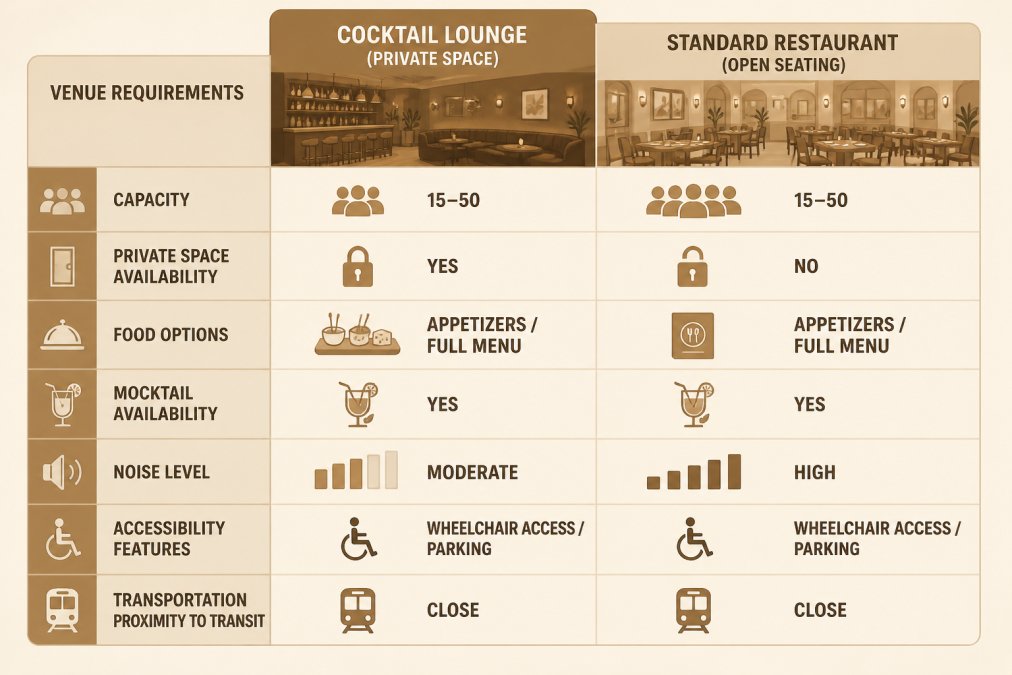
Before booking, confirm these with your venue:
- Capacity and space: Can the lounge accommodate your group size comfortably? Is private space available, or will you be in the main dining area?
- Food and beverage options: What food is available? Can they accommodate dietary restrictions? Do they offer mocktails and non-alcoholic options?
- Accessibility: Is the space wheelchair accessible? Is parking available nearby? Are there stairs or narrow passages? Can they accommodate hearing loops or other accessibility needs?
- Activities: Will they host a mixology class or guided tasting? Do they allow you to bring games or activities?
- Alcohol policy: What's their policy on responsible consumption? Do they check IDs? How do they handle over-service?
- Timing and pricing: What are their availability windows? Is there a minimum spend? Are gratuity and taxes included in quotes?
Making Your Cocktail Lounge Event Successful
Success at a cocktail lounge team-building event depends on thoughtful planning and clear communication. Here's how to execute.
Set clear expectations before the event. Tell your team what to expect, what activities are planned, and how long the event will last, including food, drink options, and atmosphere. This reduces anxiety and helps people prepare.
Communicate about alcohol thoughtfully. Be explicit that attendance does not require drinking.
Arrive early and brief the staff. Confirm your group is coming, review special requests, and make sure staff understand your team-building goals.
Mix structured activity with free time. Don't schedule back-to-back activities; allow time for organic conversation.
Pay attention to quieter team members. Cocktail lounges can feel overwhelming for introverts or those who prefer smaller interactions.
Manage group dynamics intentionally. If your team has cliques or tension, don't assume the lounge will automatically bridge those gaps. Consider seating arrangements, activity pairings, or conversation prompts that encourage cross-group interaction.
Plan for transportation. If alcohol is served, remind people to arrange rides, use rideshare, or use public transportation. This shows you prioritize safety and responsibility.
Follow up after the event. Send a thank-you message, share photos if available, and ask for feedback. This reinforces that the event mattered and gives you data to improve future efforts.
The answer to whether is a cocktail lounge good for team building is yes, absolutely, when you approach it thoughtfully. The venue's natural social environment, quality food and beverage options, and welcoming atmosphere create genuine connection opportunities. When you're ready to plan your team-building event, consider Experience Greece in DC, where our welcoming lounge space, handcrafted cocktails, and Mediterranean appetizers create the perfect backdrop for your team to strengthen relationships and build genuine connection.
Frequently Asked Questions
Is a cocktail lounge a good place for team building?
A cocktail lounge can be effective for team building if it offers the right environment and inclusive options. The informal atmosphere encourages socializing and connection, which are core to team bonding. However, success depends on having private or semi-private space, accessible seating, mocktail options for non-drinkers, and activities beyond just drinking. The venue's capacity to accommodate your group size and its hospitality staff's willingness to support your event matter significantly.
What team-building activities at a bar work best?
Mixology classes, trivia competitions, and guided tastings create structured engagement without forcing participation. Informal conversation and networking during happy hour naturally build connection when the space allows groups to gather comfortably. Game stations (cards, board games, darts) work well if the lounge has space. The key is balancing facilitated activities with unstructured time for organic socializing. Avoid activities that center solely on alcohol consumption.
How can you make a team event inclusive for non-drinkers?
Confirm the venue offers quality mocktails and non-alcoholic beverages before booking. Communicate to your team that alcohol is optional and that participation in activities doesn't require drinking. Choose activities that engage everyone equally, trivia, games, or mixology classes where non-drinkers can participate fully. Avoid messaging that emphasizes drinking or creating separate activities for non-drinkers, which signals exclusion. A welcoming lounge atmosphere treats all beverages equally.
How long should a team-building event at a cocktail lounge last?
Two to three hours is optimal for a cocktail lounge event. This timeframe allows for check-in, structured activities or informal socializing, and natural departure without fatigue. Events shorter than 90 minutes feel rushed; those longer than four hours risk declining engagement and alcohol consumption concerns. Consider your team's preferences and work schedules. A happy hour format (4:30-6:30 PM) aligns with natural after-work timing and allows people to leave without disrupting evening plans.