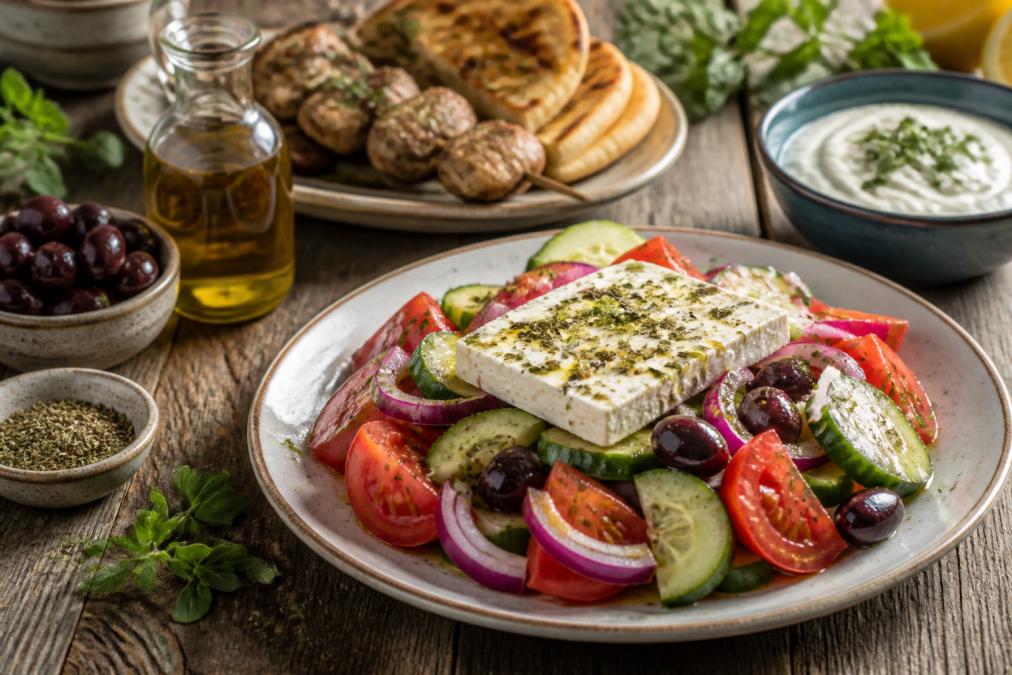
 how-to
What Makes Greek Food Authentic: A 2026 Guide
Table of Contents
- The Mediterranean Triad: Wheat, Olive Oil, and Wine
- Essential Greek Pantry Ingredients That Define Authentic Flavor
- Traditional Cooking Methods That Make Greek Food Authentic
- Seasonal Produce and the Role of Freshness
- Staple Proteins: Lamb, Fish, and Seafood
- The Meze Table: A Cultural Ritual of Sharing
- How to Find an Authentic Greek Restaurant Near Me
- Frequently Asked Questions
Last Updated: September 25, 2026
The Mediterranean Triad: Wheat, Olive Oil, and Wine
Ask anyone what makes Greek food authentic, and you'll usually hear about feta or gyros. The real answer starts with three ingredients that have anchored Greek cooking for thousands of years: wheat, olive oil, and wine.
This trio is often called the Mediterranean triad. It's the foundation of the Mediterranean diet, which U.S. News & World Report's annual diet rankings has repeatedly placed among the best eating patterns in the world.
Here's how each one shows up on a real Greek table:
- Wheat becomes crusty bread, hand-rolled phyllo, and pasta-like trahana
- Olive oil is the cooking fat, the dressing, and the finishing touch
- Wine is both a drink and an ingredient, often reduced into sauces
At Parthenon Greek Restaurant & Chevy Chase Lounge, we've cooked this way since 1989. The triad isn't a marketing slogan. It's the backbone of the menu.
Essential Greek Pantry Ingredients That Define Authentic Flavor
Authentic Greek flavor comes from a small set of pantry staples used with confidence, not a long list of exotic items. Stock these, and most traditional recipes fall into place. What most guides skip is the why, the flavor logic that makes these ingredients work as a system rather than a shopping list.
The core essential Greek pantry ingredients include:
- Extra virgin olive oil for cooking, drizzling, and finishing
- Oregano, dried and rubbed between your palms before use
- Garlic, often used raw in dips and marinades
- Lemon for brightness on everything from potatoes to fish
- Feta cheese, ideally brined and crumbly
- Yogurt, thick and plain, for tzatziki and sauces
- Honey for drizzling over cheese and pastries
- Vinegar, usually red wine vinegar, for dressings
Two herbs separate Greek cooking from its neighbors: dill and mint. Both show up in rice dishes, meatballs, and stuffed vegetables.
The flavor logic behind the pantry
Greek cooking is built on a repeating balance: fat, acid, salt, and herb. Olive oil supplies the fat. Lemon and vinegar supply the acid. Feta and olives supply the salt. Oregano, dill, and mint supply the aromatic top note. Once you see that pattern, you can read almost any traditional recipe.
- Fat + acid, olive oil and lemon on grilled fish, potatoes, or greens. The acid cuts the oil's heaviness so the dish tastes bright instead of greasy.
- Salt + fat, feta over olive-oil-dressed vegetables. The salt carries the fat's aroma to your nose.
- Herb + acid, oregano and lemon on lamb. The acid releases the herb's volatile oils, which is why Greek cooks often add lemon at the end, not the start.
- Dairy + acid, thick yogurt with lemon or vinegar in tzatziki. The acid tightens the yogurt so it doesn't taste flat.
That is the mechanism most ingredient lists never explain. It is also why a dish can have every "authentic" ingredient and still taste wrong, the ratios are off, or the acid was added too early and cooked away.
Quality signals that actually matter
What most guides miss is that quality matters more than quantity. A single good bottle of extra virgin olive oil changes a dish more than five mediocre spices ever will. A few concrete tells:
- Olive oil, look for "extra virgin," a harvest date (not just a best-by date), and a dark bottle. Oil in a clear bottle on a warm shelf is already fading.
- Oregano, Greek oregano (often labeled Origanum vulgare var. hirtum) is more pungent than the Mexican or Turkish varieties sold generically. Crush a pinch; it should smell sweet and sharp, not dusty.
- Feta, authentic feta is brined sheep's milk or a sheep-and-goat blend. If the label says "feta-style" or lists cow's milk first, it is a different cheese.
- Yogurt, real Greek-style yogurt is strained, which is why it is thick. If the ingredient list includes thickeners like pectin or gelatin, the texture is engineered, not traditional.
Traditional Cooking Methods That Make Greek Food Authentic
Greek cooking rewards patience. The techniques are simple, but they demand time and attention.
Grilling over charcoal gives lamb, fish, and vegetables their smoky edge. Slow cooking turns tough cuts into tender braises. Roasting with olive oil and lemon concentrates flavor in potatoes and vegetables. Baking in clay or covered pots keeps meats moist.
Then there's the finishing move almost every Greek cook uses: a squeeze of lemon and a drizzle of raw olive oil right before serving.
That last step matters. Heat dulls olive oil's flavor. Adding it at the end keeps the aroma intact.
A common mistake is treating Greek food like fast food. It isn't. Braised dishes and slow-roasted meats take hours, and that's the point.
Seasonal Produce and the Role of Freshness
Greek cooking follows the calendar, not the freezer aisle. Tomatoes taste best in summer. Greens peak in cooler months. Citrus arrives in winter, right when heavy dishes need brightening.
This is why the same dish can taste different in July and January. It's also why authentic Greek menus change with the seasons.
Shopping tips that make a real difference:
- Buy produce in season and use it within a few days
- Choose smaller, more fragrant herbs over large, bland ones
- Skip out-of-season tomatoes and reach for legumes instead
- Let vegetables sit at room temperature before cooking
Legumes deserve more attention than they get. Lentils, chickpeas, and white beans appear in soups and salads across the region. They're cheap, filling, and deeply traditional.
Staple Proteins: Lamb, Fish, and Seafood
Lamb is the celebratory meat. You'll find it roasted whole for holidays, grilled as chops, or ground into meatballs with mint and oregano.
Fish and seafood carry the coastal side of the cuisine.
The Meze Table: A Cultural Ritual of Sharing
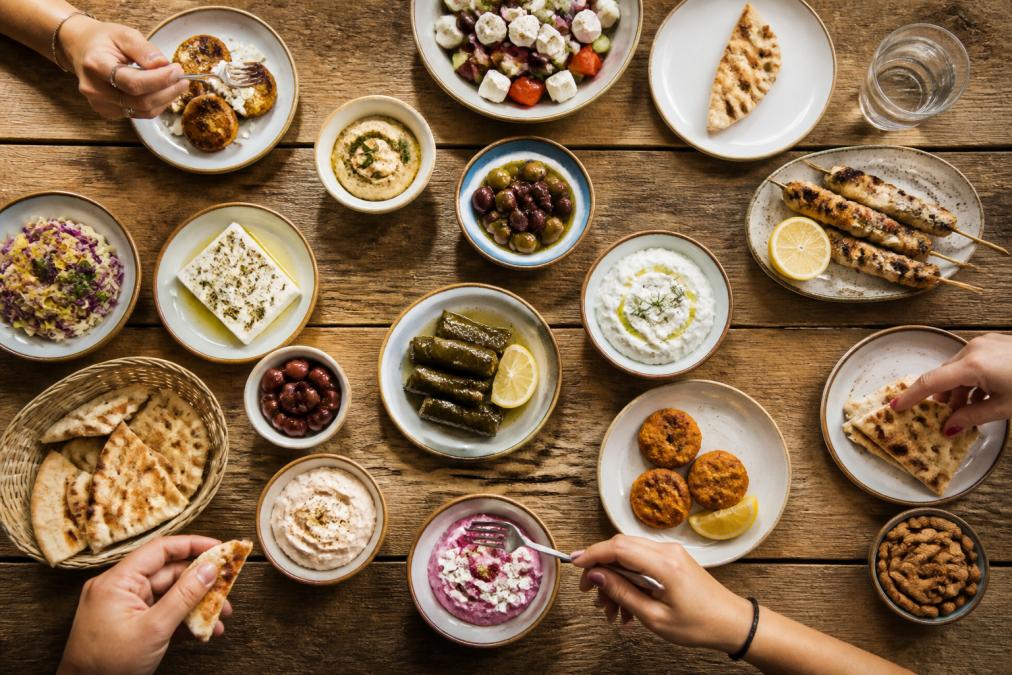
A proper meze spread mixes textures and temperatures:
- Cold dips like tzatziki and taramasalata
- Warm bites like grilled halloumi and fried squid
- Olives, pickled vegetables, and cured meats
- Bread to scoop everything up
Why meze is the authenticity test
Most articles list meze dishes and stop there. The deeper point is that meze is a pacing system, not a course. A traditional table adds plates in waves, cold first, then fried, then grilled, then something sweet, and the meal stretches for two or three hours. The food is deliberately portioned small so the conversation, not the plate, sets the tempo.
That has practical consequences you can observe:
- A real meze kitchen cooks to order in small batches. Fried items arrive hot and crisp, not stacked under a heat lamp.
- The bread keeps coming. Bread is the utensil. A table without it is a signal the kitchen is treating meze as appetizers.
- The wine is poured slowly. Meze is designed around sipping, not rounds of shots.
- Nobody is rushed to order an entree. If a server pushes you toward a main course before the second wave of plates, the kitchen is running a different playbook.
Meze versus the tourist menu
This is where authenticity vs. tourist-friendly adaptations becomes visible. A tourist-oriented menu often compresses meze into a single "appetizer sampler" and moves you straight to a plated entree. A traditional table lets meze be the meal if you want it to be.
A few questions that separate the two:
- Can you order meze as your entire dinner without pushback?
- Are the dips made in-house, or do they taste like they came from the same tub as every other restaurant's?
- Does the menu offer at least one or two dishes that are not on the standard tourist checklist, think melitzanosalata, fava, htipiti, or loukaniko?
- Is there a house wine or a short, regionally focused wine list, or just a generic by-the-glass pour?
How to Find an Authentic Greek Restaurant Near Me
Searching for a Greek restaurant near me is easy. Finding one that actually cooks traditionally takes a sharper eye.
Use this checklist before you book:
- Does the menu change with the seasons?
- Is extra virgin olive oil mentioned, not just "olive oil"?
- Are there dishes beyond gyros and salad?
- Does the kitchen grill over charcoal or open flame?
- Are simple dishes, like grilled fish, done well?
- Does the staff know where the feta and oil come from?
Frequently Asked Questions
What defines authentic Greek cuisine?
Authentic Greek cuisine is defined by a few core elements: the use of extra virgin olive oil as the primary fat, fresh seasonal produce, herbs like oregano and dill, and traditional cooking methods such as grilling and slow roasting. It also respects the Mediterranean triad of wheat, olive oil, and wine. Authentic preparation avoids shortcuts and relies on raw ingredients rather than processed substitutes.
What are the essential ingredients in traditional Greek cooking?
Essential Greek pantry ingredients include extra virgin olive oil, oregano, garlic, lemon, feta cheese, yogurt, honey, and vinegar. Legumes like lentils and chickpeas, along with wheat in the form of pita and pasta, are also staples. These ingredients form the foundation of authentic Greek dishes and are used in everything from salads to slow-cooked meats.
How can you tell if a Greek restaurant serves authentic meals?
Look for signs like a menu that changes with the seasons, the use of imported Greek products such as olive oil and feta. Authentic restaurants often offer a meze-style menu and have a warm, hospitable atmosphere. You can also ask about their sourcing.
What role does olive oil play in authentic Greek food?
Olive oil is central to authentic Greek food. Extra virgin olive oil is used not just for cooking but also as a finishing drizzle and a key component of dressings and marinades. The purity and quality of the olive oil significantly impact the overall taste of the dish.