 ultimate-guide
Greek Restaurant Catering for Office Events: A Complete Guide
Table of Contents
- Why Greek Restaurant Catering Works for Office Events
- Corporate Catering Services: What to Expect
- Office Lunch Catering Ideas: Mediterranean Menu Options
- Catering Dietary Restriction Guide
- Ordering for Large Groups: Logistics and Timing
- Budgeting and Per-Head Costing for Office Catering
- What Makes Authentic Greek Catering Stand Out
- Frequently Asked Questions
Last Updated: September 27, 2026
Why Greek Restaurant Catering Works for Office Events
Greek restaurant catering for office events combines authentic Mediterranean flavors with practical logistics, creating an experience that feels special without turning your office into a kitchen.
Greek hospitality emphasizes fresh ingredients, bold flavors, and generous portions that make people feel cared for. Greek restaurant catering for office events brings tradition and intentionality to the table, not just disposable containers.
Parthenon Greek Restaurant & Chevy Chase Lounge has served the community since 1989. The best office catering arrives hot and fresh, accommodates dietary needs, and tastes thoughtfully prepared, exactly what we bring to corporate events.
Corporate Catering Services: What to Expect
When you work with an established Greek restaurant, you're accessing an operational framework designed to make your event seamless, not just ordering food.
Professional catering services handle timing, temperature, portion control, setup, and cleanup. A reputable operation prevents late arrivals and lukewarm food through built systems.
Full-Service vs. Drop-Off Catering
Drop-off catering works best for offices under 25 people where your team handles setup. The restaurant delivers organized containers with utensils and plates; your staff manages service. This costs less and works well with a dedicated event coordinator.
Full-service catering means restaurant staff handles setup, breakdown, serving, and temperature management while your team focuses on the event. This works better for groups over 30, venues without kitchen access, or when you want hands-off logistics.
Event Types Served
Greek restaurant catering for office events covers corporate lunches, working meetings, and team gatherings around fresh Mediterranean food that doesn't cause afternoon sluggishness.
Greek catering also works for client entertainment, celebrations, and team-building. Sharing plates and mezze spreads encourage mingling and signal investment in quality.
Office Lunch Catering Ideas: Mediterranean Menu Options
Mediterranean cuisine emphasizes fresh vegetables, quality proteins, olive oil, grains, and herbs, creating vibrant meals without heaviness. This foundation helps you make better menu choices for Greek restaurant catering for office events.
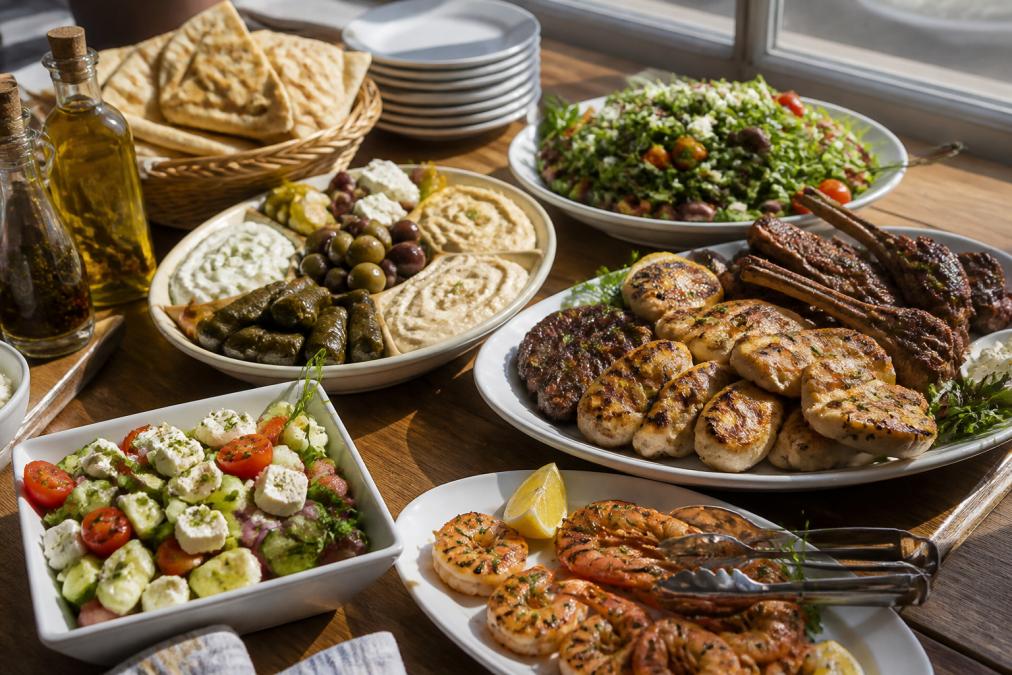
For office settings, grilled proteins, fresh vegetables, and whole grains keep energy stable. Smaller portions of rich items paired with larger vegetable portions prevent post-lunch crashes.
Customizable Catering Menus
The best Greek restaurant catering for office events offers menu flexibility. Restaurants like Parthenon build menus matching your group's preferences, dietary needs, and budget rather than forcing preset packages.
Customizable menus let you choose proteins, sides, bread, and quantities. This flexibility is crucial because office groups rarely have homogeneous eating preferences.
Buffet Style and Sharing Plates
Two service styles dominate office catering: traditional buffet setup and Mediterranean-style sharing plates.
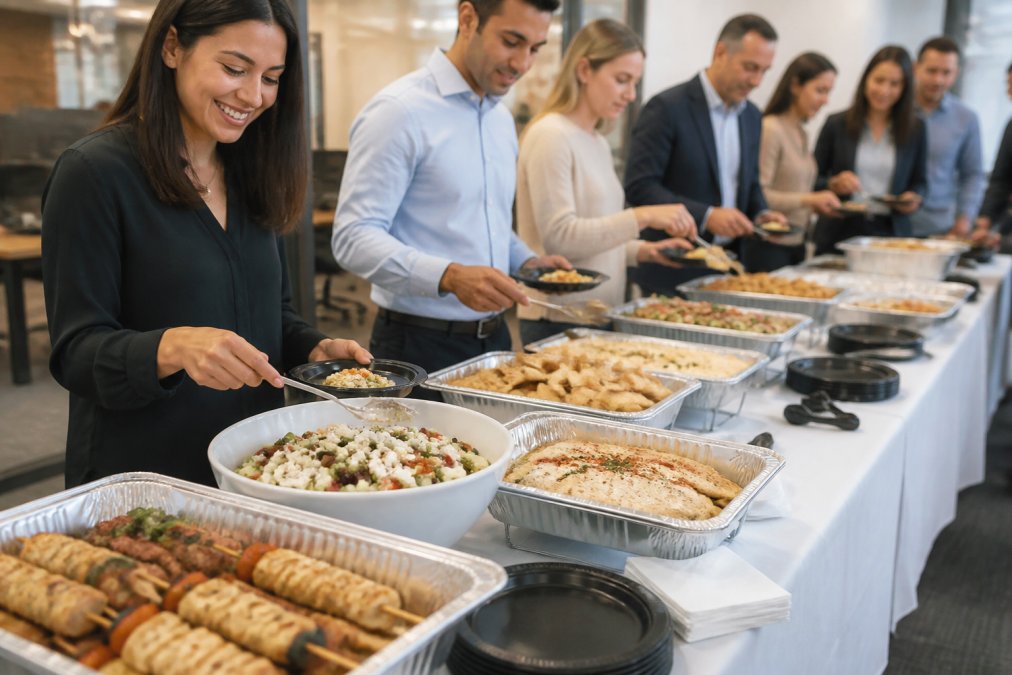
Buffet-style catering works well when you have a defined dining space and people can move through a line. It's efficient, allows people to customize their portions, and works well for groups up to 75 people. The setup typically includes hot items (grilled proteins, warm sides), cold items (salads, mezze platters), bread, and condiments.
Sharing plates, the Mediterranean approach, means the restaurant provides large platters designed for groups to serve themselves family-style. This approach creates more conversation and connection because people are physically sharing food. It also looks more impressive on the table and signals that you've invested in a more intentional experience. Sharing plates work particularly well for smaller groups (15-40 people) or when you want to emphasize the communal, welcoming aspect of Greek hospitality.
Catering Dietary Restriction Guide
Dietary accommodations are no longer optional considerations in office catering, they're essential logistics. A restaurant that takes dietary restrictions seriously doesn't treat them as exceptions or complications. They're built into how they operate.
When you're planning Greek restaurant catering for office events, you'll typically encounter several dietary categories that need accommodation: gluten-free, vegetarian, vegan, dairy-free, and various allergies.
Gluten-Free and Allergen Management
Gluten-free catering requires more than just removing bread. It requires separate preparation surfaces, dedicated utensils, and genuine understanding of cross-contamination risks. A professional catering operation has systems for this, they don't just set aside a gluten-free container and call it safe.
Many traditional Greek dishes are naturally gluten-free or easily adapted: grilled proteins, most vegetable sides, rice-based dishes, and salads. The challenge comes with shared preparation and serving. A restaurant that takes gluten-free seriously will prepare gluten-free items separately, use dedicated serving utensils, and clearly label everything.
Beyond gluten, common allergens in Greek cuisine include seafood, tree nuts (especially in certain preparations), and dairy (feta, cheese). A professional catering operation will ask detailed questions about allergens, keep items separated, and provide clear documentation of ingredients.
Vegetarian-Friendly and Vegan Options
Greek cuisine has deep vegetarian traditions. Mezze platters naturally include hummus, baba ganoush, dolmas (grape leaves), roasted vegetables, and feta cheese. Grilled vegetables, salads with olive oil, and grain-based sides round out vegetarian options.
Vegan catering requires removing dairy and animal products entirely. Many Greek dishes adapt well: grilled vegetables, salads with olive oil-based dressings (not dairy-based), rice pilaf, beans, and legume-based sides. The key is ensuring that vegan items are prepared separately and not cross-contaminated with dairy during cooking or serving.
A dietary restriction guide for your team should identify who needs what accommodation, communicate those needs clearly to your caterer at least two weeks in advance, and verify that the restaurant can actually deliver on those commitments.
| Dietary Restriction | Greek Catering Adaptation | Preparation Consideration |
|---|---|---|
| Gluten-Free | Grilled proteins, rice dishes, salads, roasted vegetables | Separate prep surfaces, dedicated utensils, no cross-contamination |
| Vegetarian | Mezze platters, grilled vegetables, feta-based dishes, salads | Ensure no meat broths in vegetable sides |
| Vegan | Grilled vegetables, salads with olive oil, rice, legumes, beans | No dairy, no animal products, separate prep area |
| Dairy-Free | Grilled proteins, salads with olive oil dressing, vegetables, rice | Avoid feta, cheese, cream-based sauces |
| Nut Allergies | Most grilled items, salads, rice dishes | Check all prepared items for tree nuts, separate prep |
Ordering for Large Groups: Logistics and Timing
Ordering Greek restaurant catering for office events at scale requires thinking through logistics that smaller orders don't demand. A 15-person lunch is straightforward. A 60-person corporate event involves coordination across multiple variables: delivery windows, setup time, temperature management, and serving capacity.
Lead Time and Booking Process
Most professional catering operations require a minimum of two weeks' notice for large orders. The lead time matters because restaurants need to source quality ingredients, plan kitchen scheduling, and ensure they have adequate staff to execute your event properly.
Delivery and Setup Coordination
Delivery timing is often the most critical logistics piece. You need food arriving hot and ready to serve, not 30 minutes before your event starts or so early that it cools down. Professional caterers will work with you to identify the optimal delivery window.
Budgeting and Per-Head Costing for Office Catering
Understanding per-head catering costs helps you budget accurately and compare options. Per-head pricing typically includes the food itself, basic service (plates, utensils, napkins), and delivery. It may or may not include full-service staff, setup, and cleanup depending on the caterer's model.
What Makes Authentic Greek Catering Stand Out
Authentic Greek restaurant catering for office events differs from generic Mediterranean catering in specific, measurable ways. The difference starts with ingredients and extends through technique, tradition, and how a restaurant approaches hospitality.
Frequently Asked Questions
What are the best Greek dishes for office catering?
Grilled proteins like lamb and chicken, mezze platters with hummus and tzatziki, fresh seafood, and Mediterranean salads work well for office settings. Sharing plates encourage team bonding, while individual portions suit formal meetings. Greek catering typically includes authentic dishes prepared with imported ingredients and fresh Mediterranean flavors that appeal to diverse palates.
How much food should I order for a corporate Greek lunch?
Plan based on meal type and duration. For a 2-hour lunch with 40 people, order enough for full plates plus appetizers. For shorter meetings, appetizer-style mezze platters suffice. Discuss your specific event with your catering provider to receive a custom quote based on guest count, timing, and menu preferences.
Does Greek catering accommodate dietary restrictions like gluten-free or vegan?
Yes. Greek cuisine naturally offers many gluten-free options, including grilled proteins, seafood, salads, and vegetable dishes. Many restaurants also provide vegan-friendly mezze and prepared vegetables. Always notify your catering provider of dietary needs in advance so they can customize your menu and ensure proper food safety standards for allergen management.
What is the typical lead time for booking office catering?
Most Greek catering providers recommend booking in advance for standard events, though larger groups or specific dates may require additional notice. Confirm availability and lead time requirements directly with your catering service when planning your corporate event.
How do I choose between buffet-style and individual Greek meal boxes?
Buffet-style works best for casual office lunches and networking events where guests serve themselves and mingle. Individual meal boxes suit formal meetings, working lunches, or when you need precise portion control. Consider your venue, guest count, and event tone when deciding which service style fits your needs.
What should I include in a logistics checklist for office catering?
Confirm guest count and dietary restrictions, specify delivery time and location, arrange table setup and serving equipment, communicate parking and building access details, verify food safety handling, and establish a point of contact for day-of coordination. Discuss these logistics with your catering provider at least one week before your event.