 blog
How to Spot Fresh Seafood on DC Restaurant Menus
Last Updated: October 30, 2026
Quick Summary
DC restaurants with fresh seafood options name specific species, change their menus with the season, and answer sourcing questions without flinching. Ask what came in today and whether the fish is wild-caught or farmed before you order. A kitchen that tracks its product will tell you plainly.
- Researchers at George Washington University found 33% of seafood samples from six DC restaurants were mislabeled.
- Ask what came in today, whether it is wild-caught or farmed, and how it is prepared.
- The Oceanaire says its seafood is flown in daily and shifts with seasonal availability.
- Ask the price per unit and whether shellfish is fresh or frozen before ordering market-priced items.
- Parthenon serves Greek-style seafood with extra virgin olive oil and has operated since 1989.
Table of Contents
- What Fresh Seafood Actually Means on a DC Menu
- How to Choose Fresh Seafood at a Restaurant
- Best Seafood Restaurants in DC and What Sets Them Apart
- Greek Restaurants in DC with Seafood: A Different Approach
- Crab, Lobster, and Oysters: What to Expect Across the City
- Matching Neighborhoods and Occasions to the Right Table
- Book a Table at Parthenon for Fresh Greek Seafood
- Frequently Asked Questions
What Fresh Seafood Actually Means on a DC Menu
"Fresh seafood" on a menu usually means the fish was never frozen before it reached the kitchen, or that it arrived recently enough to be served at its peak. The phrase is not regulated, which is exactly why it pays to know what to look for.
Here is the uncomfortable part. A menu description is not a guarantee of what lands on your plate.
Fresh fish should smell clean and mild, never sharp or ammonia-like. Fillets should look moist with tight, springy flesh, and shellfish should be kept cold and displayed clearly. Those are the basics. The rest comes down to what you ask and what the restaurant is willing to tell you.
How to Choose Fresh Seafood at a Restaurant
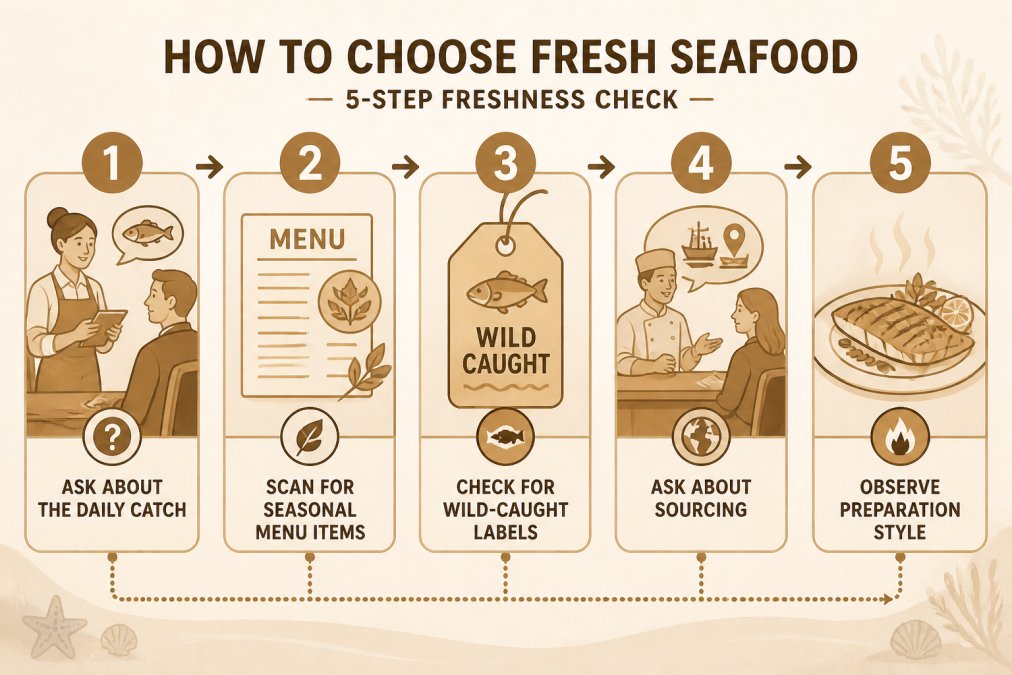
Choosing well comes down to three moves: ask about the daily catch, read the menu for seasonal signals, and pay attention to how dishes are prepared. A restaurant that sources carefully will answer sourcing questions without flinching. One that deflects is telling you something.
Questions to Ask Before You Order
Start with "What came in today?" A server who can name specific fish and where it came from is a good sign. Follow with "Is this wild-caught or farmed?" and "How is it prepared?" Grilled branzino and simply seared fish let the ingredient speak. Heavy sauces can mask a lot, and that cuts both ways.
Ask whether the oysters are dated and where they are from. Oyster bars that track harvest dates tend to care about the rest of the menu too. If you have dietary needs, ask about preparation options before you commit: many kitchens can grill rather than fry, or hold the butter and cheese. It never hurts to ask.
Reading the Menu for Freshness Clues
Seasonal seafood sections that change with the market are a strong signal. The Oceanaire says its seafood is flown in daily and that menu selections shift with seasonal availability and market conditions (The Oceanaire Seafood Room on daily sourcing). That kind of language tells you the kitchen is buying to the season, not working through a freezer.
Watch for vague claims like "fresh catch" with no species named. Specificity is your friend: branzino, stone crab, Maine lobster, wild-caught shrimp. A menu that names the fish and the preparation is usually a menu written by someone who knows the product.
Best Seafood Restaurants in DC and What Sets Them Apart
The best seafood restaurants in DC separate themselves on sourcing transparency, menu specificity, and how well the kitchen handles a simple piece of fish. You can rank almost any seafood menu on those three criteria before you ever sit down.
Here is how we would compare the signals across a typical DC seafood menu:
| Signal | What It Looks Like | Why It Matters |
|---|---|---|
| Named species | "Grilled branzino," "Maine lobster roll" | Shows the kitchen knows its product |
| Seasonal changes | Menu shifts with the market | Suggests buying to the season |
| Sourcing language | Wild-caught, responsibly sourced | Signals supply chain awareness |
| Simple preparations | Grilled, crudo, seared | Lets freshness show through |
| Clear shellfish handling | Dated oysters, cold display | Reduces risk and improves taste |
Parthenon Greek Restaurant & Chevy Chase Lounge sits on that list for a different reason than a raw bar does. Our seafood is prepared in Greek style, and our kitchen uses extra virgin olive oil and imported Greek products. You can explore Parthenon's Greek restaurant menu to see the grilled seafood and meze options before you choose.
Greek Restaurants in DC with Seafood: A Different Approach
Greek restaurants in DC with seafood treat fish as part of a shared table rather than a single centerpiece. That changes how you order and what you should expect. Instead of one large fillet, you get a spread: grilled fish, seafood meze, dips, salads, and something from the charcoal grill.
Cordelia Fishbar describes a menu that spans fresh crudo and conserva through seasonal seafood creations and charcoal-grilled specialties (Cordelia Fishbar on its seafood menu). If you are new to ordering this way, our guide to Greek appetizers and meze explains how the small plates fit together.
The practical difference: at a Greek table, you can build a seafood meal around three or four shared plates and still leave room for lamb or a vegetable dish. That flexibility suits groups where not everyone is a seafood person.
Crab, Lobster, and Oysters: What to Expect Across the City
Crab, lobster, and oysters are where seafood menus diverge most, and where knowing local conventions and current market conditions helps you order well. The three categories also carry the widest price swings, so it pays to understand what you are paying for before the check arrives.
Crab: Cakes, Stone Crab, and Blue Crab
A crab cake should be lump meat held together lightly, not packed with filler. Pricing for crab cakes varies by portion, meat grade, and season. If a menu lists a crab cake at the low end of that range, ask what grade of meat is used, backfin and special grade cost less than jumbo lump, and the texture difference is noticeable.
Ask the server for pricing and portion size before ordering any market-priced seafood.
Blue crab is the local tradition, and in-season blue crab houses typically price by the dozen or by the bushel. If you see a "market price" listing with no number, that is not a red flag on its own, but ask what it is before you order so the check does not surprise you.
Lobster: Rolls, Whole Lobster, and the Fresh-vs-Frozen Question
A lobster roll is judged on the amount of meat and whether the roll is toasted. Lobster rolls and whole lobster are priced in different ways, and it is worth asking whether a lobster is fresh or frozen before you order.
Lobster bisque should taste of lobster, not cream and thickener. If the bisque is the star of a menu section, ask whether it is made in-house or brought in; the answer tells you something about the rest of the kitchen.
Oysters: Origin, Harvest Dates, and Pricing
Oysters should arrive cold, shucked clean, and labeled by origin. A serious oyster bar will list the grower, the waterway, and often the harvest date. Ask whether the oysters are dated, oyster bars that track harvest dates tend to care about the rest of the menu too.
Oyster pricing varies by tier and origin, so ask about current prices before ordering. If you are ordering a dozen, ask whether the kitchen will build a mixed dozen so you can compare origins side by side.
You can see photos of Parthenon's seafood and meze dishes to set expectations before you visit. Seeing the plate is often more useful than reading a description.
Matching Neighborhoods and Occasions to the Right Table
Where you eat matters as much as what you order, and the practical details, transit, parking, reservations, price, and noise level, often decide whether a seafood dinner works. Most seafood lists stop at naming neighborhoods. Here is how to match the room to the occasion, with the logistics that actually affect your evening.
Downtown, the Wharf, and Near the White House
Downtown and the Wharf suit a business lunch or a pre-theater dinner. If you are dining before a show, book an early reservation, pre-theater seatings fill first, and a kitchen that knows you are on a clock will pace the meal accordingly.
Georgetown and Adams Morgan
Georgetown and Adams Morgan draw a weekend crowd. Both neighborhoods reward a reservation on Friday and Saturday nights, and both have a mix of casual and date-night rooms, check the noise level before you book a quiet dinner.
Chevy Chase and Quieter Rooms
Chevy Chase is quieter, which makes it easier to actually talk. You can explore Parthenon Restaurant in Chevy Chase, DC for location and dining details. It suits a family dinner, a business conversation, or a group that wants to hear each other. If your group includes people who do not eat seafood, a Greek meze format helps, shared plates let the non-seafood diners build a meal from lamb, vegetables, dips, and salads while the seafood eaters order grilled fish and shellfish.
Matching the Occasion
| Occasion | What to prioritize | Practical check |
|---|---|---|
| Happy hour | A lounge and a menu built for sharing | Confirm happy-hour oyster and small-plate pricing before you go |
| Business lunch | A table where conversation carries | Ask for a quieter table and confirm the kitchen can pace the meal |
| Date night | A room with atmosphere and a manageable noise level | Book ahead and ask about bar seating |
| Family dinner | Flexible seating and non-seafood options | Confirm high chairs, accessibility, and shared-plate formats |
| Group celebration | Space for a group and a set menu | Ask about private or semi-private space and per-person pricing |
Before You Go: Verify the Details
Menus and catches change, so confirm the current offering before you travel. A quick call or a look at the restaurant's current menu page will tell you whether the dish you want is available that day. Ask about reservation needs, hours, and accessibility at the same time, especially if anyone in your group has mobility needs. Parthenon's Chevy Chase Lounge and outdoor patio give you options for many occasions.
Book a Table at Parthenon for Fresh Greek Seafood
If you want seafood you can ask questions about, served in a Greek tradition that has been running since 1989, Parthenon Greek Restaurant & Chevy Chase Lounge is built for exactly that. Our kitchen works with fresh seafood, imported Greek products, and extra virgin olive oil. The Chevy Chase Lounge serves handcrafted cocktails, and we provide private catering services.
The challenge is simple: most seafood menus tell you very little, and you deserve better than a guess. Get started with Parthenon Greek Restaurant & Chevy Chase Lounge and reserve your table for lunch, dinner, or weekend Greek brunch, or Experience Greece in DC and let the shared plates do the rest.
Frequently Asked Questions
Where can I find fresh seafood in DC?
Look for restaurants that change their menu based on seasonal availability and the market, and ask staff what came in that day. Greek restaurants in DC with seafood often build menus around grilled fish and simple preparations that let freshness show. Parthenon Greek Restaurant & Chevy Chase Lounge has served traditional Greek dishes since 1989.
How can I tell whether seafood is fresh at a restaurant?
Ask what the daily catch is and how it is prepared. Menus that rotate with seasonal availability tend to signal fresher sourcing than static lists. It pays to ask specific questions about species and origin. Simple preparations like grilled fish or crudo make it easier to judge quality on the plate.
Are there DC restaurants with both Greek food and fresh seafood?
Yes. Parthenon Greek Restaurant & Chevy Chase Lounge pairs fresh seafood with Greek classics like gyros and family recipes, using imported Greek products and extra virgin olive oil. Reservations are available online.
What should I ask when ordering seafood at a restaurant?
Ask what is freshest that day, whether the fish is wild-caught or farmed, and how it will be prepared. Ask if the kitchen can grill it simply rather than bury it in sauce. If you have dietary needs, ask about preparation options before you commit. These questions take under a minute and tell you more about a kitchen than any menu description.