 blog
Budget-Friendly Mediterranean Menu: 5 Essential Planning Tips
Last Updated: October 23, 2026
Quick Summary
A budget-friendly Mediterranean menu relies on affordable pantry staples like beans, lentils, canned tomatoes, and olive oil rather than expensive ingredients. Build your pantry in layers over two months, buy store brands, use frozen vegetables, and batch cook components in single-serving portions to maximize savings and minimize waste.
- Store-brand canned beans, tomatoes, and olive oil save 30-40% versus name brands with identical performance
- Frozen vegetables cost 40-50% less than fresh and retain more nutrients than produce shipped long distances
- A pound of dried lentils costs about two dollars and yields eight servings at roughly 25 cents per serving
- Batch cooking components in single-serving portions prevents spoilage and food waste that destroys budgets
- A well-planned weekly meal using overlapping ingredients reduces grocery costs by 20-30% compared to shopping without a plan
Table of Contents
- Start with Mediterranean Diet on a Budget Fundamentals
- Build Your Mediterranean Pantry Staples Foundation
- Master Cheap Mediterranean Meals Through Strategic Shopping
- Create Your Weekly Mediterranean Meal Plan
- Reduce Waste and Maximize Ingredient Value
- Batch Cook and Prep for the Week Ahead
- Frequently Asked Questions
Start with Mediterranean Diet on a Budget Fundamentals
A budget-friendly Mediterranean menu doesn't require expensive ingredients or complicated cooking. Eating well on a budget starts with understanding what makes Mediterranean cuisine affordable in the first place.
The Mediterranean diet emphasizes whole grains, legumes, seasonal produce, and healthy fats like extra virgin olive oil. These are naturally inexpensive ingredients that form the backbone of traditional Greek cooking. The key is buying smart and planning ahead.
Most people think Mediterranean eating means constant fresh seafood and imported cheeses. That's a myth. The real Mediterranean diet relies on pantry staples that cost just pennies per serving.
Build Your Mediterranean Pantry Staples Foundation
Your pantry is where a budget-friendly Mediterranean menu begins.
Layer 1, the non-negotiables (stock these first):
- Extra virgin olive oil (store brand is fine)
- Canned beans and lentils
- Canned tomatoes
- Whole grain pasta
- Brown rice
- Garlic and onions
- Dried oregano
These seven items alone produce pasta e fagioli, tomato-braised beans, lentil soup, and dozens of variations. A can of store-brand beans typically runs under a dollar and yields about four half-cup servings, roughly 25 cents per serving of plant protein. A 28-ounce can of store-brand crushed tomatoes often costs less than a single fresh tomato salad at a deli and forms the base of three or four meals.
Layer 2, the flavor multipliers (add over the next two to three trips):
- Canned sardines and tuna
- Farro or barley
- Nuts and seeds (buy from bulk bins, not the snack aisle)
- Dried thyme and basil
- Red wine vinegar
- A jar of tahini
Tahini is the sleeper budget item: a single jar stretches across hummus, salad dressings, and sauces for weeks, and per-ounce it beats almost any prepared condiment.
Layer 3, the incremental spice rack. This is where most budget guides go silent, and it's where new Mediterranean cooks overspend. Do not buy a 12-jar spice set.
The store-brand rule. Store brands perform identically to name brands for canned tomatoes, beans, olive oil, and dried pasta. The only difference is the label.
Check the unit price label on the shelf, not the package price. A larger container of olive oil almost always costs less per ounce than a small bottle, even when the sticker price looks higher. The same logic applies to bulk-bin lentils and rice versus boxed versions.
A layered pantry, seven core items, then flavor multipliers, then one spice per trip, gets you to a fully stocked Mediterranean kitchen over about two months without a single large outlay. That pacing is the real budget trick, not the shopping list itself.
Master Cheap Mediterranean Meals Through Strategic Shopping
Strategic shopping transforms your budget. Most people overspend because they shop without a plan or buy items at full price.
Shopping rules for a budget-friendly Mediterranean menu:
- Shop sales and stock up on shelf-stable items
- Buy frozen vegetables instead of fresh (they're cheaper and last longer)
- Compare unit prices, not package prices
- Avoid pre-cut or pre-prepared ingredients
- Buy whole items and prep them yourself
Unit pricing reveals the real cost. A bulk container of olive oil costs less per ounce than a small bottle, even if the upfront price looks higher. Check the unit price label on the shelf.
Frozen vegetables are harvested at peak ripeness and flash-frozen immediately. They retain more nutrients than fresh produce shipped across the country. They also cost 40-50% less and never spoil in your freezer.
Seasonal Produce and Bulk Buying
Seasonal produce is the secret weapon of budget Mediterranean cooking. When tomatoes are in season, they cost half the price of out-of-season tomatoes. The same applies to zucchini, peppers, eggplant, and leafy greens.
Buy seasonal produce in bulk when prices drop. Freeze what you can't use immediately. Tomatoes can be roasted and frozen. Peppers can be diced and frozen. Zucchini works frozen in cooked dishes.
Bulk buying of dried goods saves money significantly. Buy lentils, beans, and grains from bulk bins instead of packaged versions. You pay only for what you need and avoid packaging waste.
Protein Swaps and Plant-Based Options
Meat is expensive. The Mediterranean diet doesn't rely on it anyway. Plant-based proteins cost a fraction of the price and deliver the same nutritional value.
Legumes are the foundation of affordable Mediterranean eating. Beans and lentils contain fiber and protein. A pound of dried lentils costs about two dollars and yields eight servings. That's 25 cents per serving for complete protein.
Canned sardines and mackerel provide omega-3 fatty acids at low cost. A can costs two to three dollars and serves two people. Sardines on whole grain toast with tomatoes and olive oil is a complete, nutrient-dense meal for under two dollars per person.
Eggs are affordable protein. Mediterranean cuisine uses eggs in many dishes. Shakshuka, a dish of eggs poached in tomato sauce, costs pennies to make and feeds a family.
Create Your Weekly Mediterranean Meal Plan
A weekly meal plan prevents impulse purchases and food waste. Planning takes thirty minutes and saves money throughout the week.
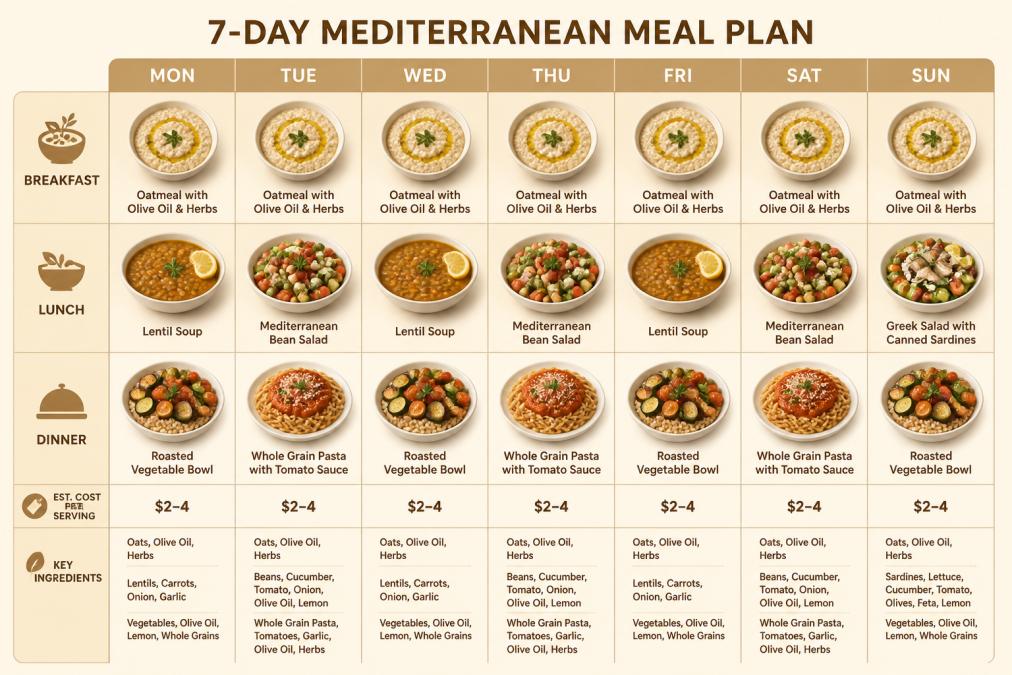
Start by listing meals you already know how to make. Build your plan around ingredients that appear in multiple recipes.
Plan meals around what's on sale. If olive oil is on sale, plan dishes that use olive oil. If beans are discounted, build your week around legume-based meals.
Sample weekly structure for a budget-friendly Mediterranean menu:
- Monday: Lentil soup with whole grain bread
- Tuesday: Mediterranean bean salad with seasonal vegetables
- Wednesday: Pasta with tomato sauce and white beans
- Thursday: Shakshuka with whole grain toast
- Friday: Roasted vegetables with chickpeas and olive oil
- Saturday: Greek salad with canned sardines
- Sunday: Minestrone soup using vegetable scraps
This structure uses overlapping ingredients. Tomatoes, beans, and olive oil appear in multiple meals. You buy them once and use them throughout the week.
A well-planned week reduces grocery costs by 20-30% compared to shopping without a plan. You buy only what you need and use everything you buy.
Reduce Waste and Maximize Ingredient Value
Food waste destroys budgets. Every vegetable scrap and leftover you throw away is money in the trash.
Use vegetable scraps to make stock. Save onion skins, carrot tops, celery leaves, and herb stems.
Store produce properly to extend shelf life. Leafy greens last longer in sealed containers.
Repurpose leftovers creatively. Roasted vegetables become salad toppings or pasta sauce. Cooked grains become grain bowls or stuffing.
According to USDA food waste reduction guidance, the average household throws away 30-40% of purchased food.
Preservation techniques extend ingredient life. Pickle vegetables in vinegar and olive oil.
Batch Cook and Prep for the Week Ahead
Batch cooking is the single highest-leverage habit in a budget Mediterranean kitchen, but almost every guide assumes you're feeding a family of four.
The component method for small households. Instead of cooking finished meals in bulk, cook building blocks in quantities you can freeze in single- or double-serving portions:
- Beans and lentils: Cook one pound of dried beans, then freeze in two-cup portions. A pound of dried lentils typically costs around two dollars and yields about eight half-cup servings, roughly 25 cents per serving. Freeze what you won't eat within four days.
- Grains: Cook farro, brown rice, or barley, then freeze in one-cup portions. Reheat straight from frozen in a covered pan with a splash of water.
- Roasted vegetables: Roast one sheet pan, not two. Cool, then freeze in single-serving bags. Roasted zucchini, peppers, and eggplant thaw well in cooked dishes (they go soft, so save them for sauces, stews, and grain bowls rather than salads).
- Sauces: Make one batch of tomato sauce or herb oil and freeze in ice cube trays, then transfer the cubes to a bag. Two cubes equal roughly one serving of sauce.
A realistic two-hour Sunday for one or two people:
- Start a pot of beans or lentils (they cook hands-off while you do everything else).
- Roast one sheet pan of seasonal vegetables.
- Cook one pot of grain.
- Blend one sauce or dressing.
- Portion everything into single- or double-serving containers and freeze what you won't eat within four days.
That's roughly eight to ten meal components from two hours of work, enough to assemble a week of varied dinners without eating the same bowl five nights straight.
Why this beats family-style batch cooking for small households. A large pot of soup made for four people produces leftovers that spoil before one person can finish them; the savings evaporate as food goes in the trash. Freezing in single-serving units means you cook once but eat over three or four weeks, and you can mix components, lentils one night, roasted vegetables and farro the next, so variety comes from assembly, not from cooking five separate meals.
Freezer logistics that actually work. Label every container with the contents and date. Most Mediterranean components, soups, stews, cooked grains, bean dishes, tomato sauce, keep well frozen for about three months. Herbs and greens do not freeze well raw; chop and freeze them in olive oil instead, or dry them.
Buy a set of cheap, stackable glass containers in one- and two-cup sizes. The upfront cost pays back within a few weeks because you stop throwing away spoiled leftovers, and glass doesn't hold onto the smell of last week's lentil soup.
For one- or two-person households, batch cooking works best as component prep, not finished-meal prep. Cook building blocks, freeze them in single servings, and assemble meals fresh. You get the per-serving savings of bulk cooking without the waste that comes from cooking family-sized portions for a smaller table. If you'd like to experience authentic Mediterranean flavors prepared by professionals, consider visiting Experience Greece in DC to see how traditional techniques bring these budget-friendly ingredients to life.
Frequently Asked Questions
How much does a budget-friendly Mediterranean menu typically cost per week?
The cost depends on household size, local produce availability, and whether you buy in bulk. Most families can plan a budget-friendly Mediterranean menu for $60-$100 per week by prioritizing seasonal produce, store brands, and legumes as primary protein sources. Buying canned sardines, frozen vegetables, and whole grains in bulk reduces per-serving costs significantly. Focus on unit pricing when comparing options, larger quantities almost always cost less per ounce.
What are the cheapest protein options for Mediterranean meals?
Legumes like lentils, chickpeas, and beans are the most cost-effective plant-based proteins for Mediterranean cooking. Canned sardines and frozen white fish offer affordable omega-3 fatty acids. Eggs provide nutrient-dense protein at minimal cost. Combine these with whole grains and seasonal vegetables to build filling, nutritious meals. Meatless Monday meals built around legumes and whole grains can reduce your weekly grocery bill by 20-30% compared to meat-heavy menus.
How do I plan a weekly Mediterranean meal plan without overspending?
Start by listing seasonal produce available in your area, then build meals around those items. Choose 3-4 core recipes and repeat them with ingredient variations throughout the week. Buy pantry staples (olive oil, canned tomatoes, dried herbs) in bulk when on sale. Batch cook grains and legumes on Sunday for use across multiple meals. Plan one meatless meal per day using beans or lentils. This approach cuts prep time, reduces food waste, and keeps costs predictable.
What pantry staples should I buy for budget Mediterranean cooking?
Essential pantry staples include extra virgin olive oil, canned tomatoes, dried oregano and other Mediterranean herbs, whole grain pasta, brown rice, lentils, chickpeas, and canned sardines. Store brands cost 30-40% less than name brands without sacrificing quality. Buy these items in bulk when prices drop. Keep onions, garlic, and potatoes on hand, they're affordable, nutrient-dense, and form the base of countless Mediterranean dishes. Frozen herbs and spices from the bulk section reduce waste compared to small jars.